Fulfillment for Amazon FBA vs Self-Fulfillment: Costs, Pros, and Cons

Fulfillment for Amazon FBA vs Self-Fulfillment: Costs, Pros, and Cons

Key Takeaway

The fba vs self fulfillment cost comparison isn’t just about storage fees—it’s about understanding your break-even point, order volume, and whether paying Amazon’s premium is worth outsourcing your entire logistics operation.

Table of Contents

Understanding Amazon FBA vs Self-Fulfillment: What’s the Real Difference?
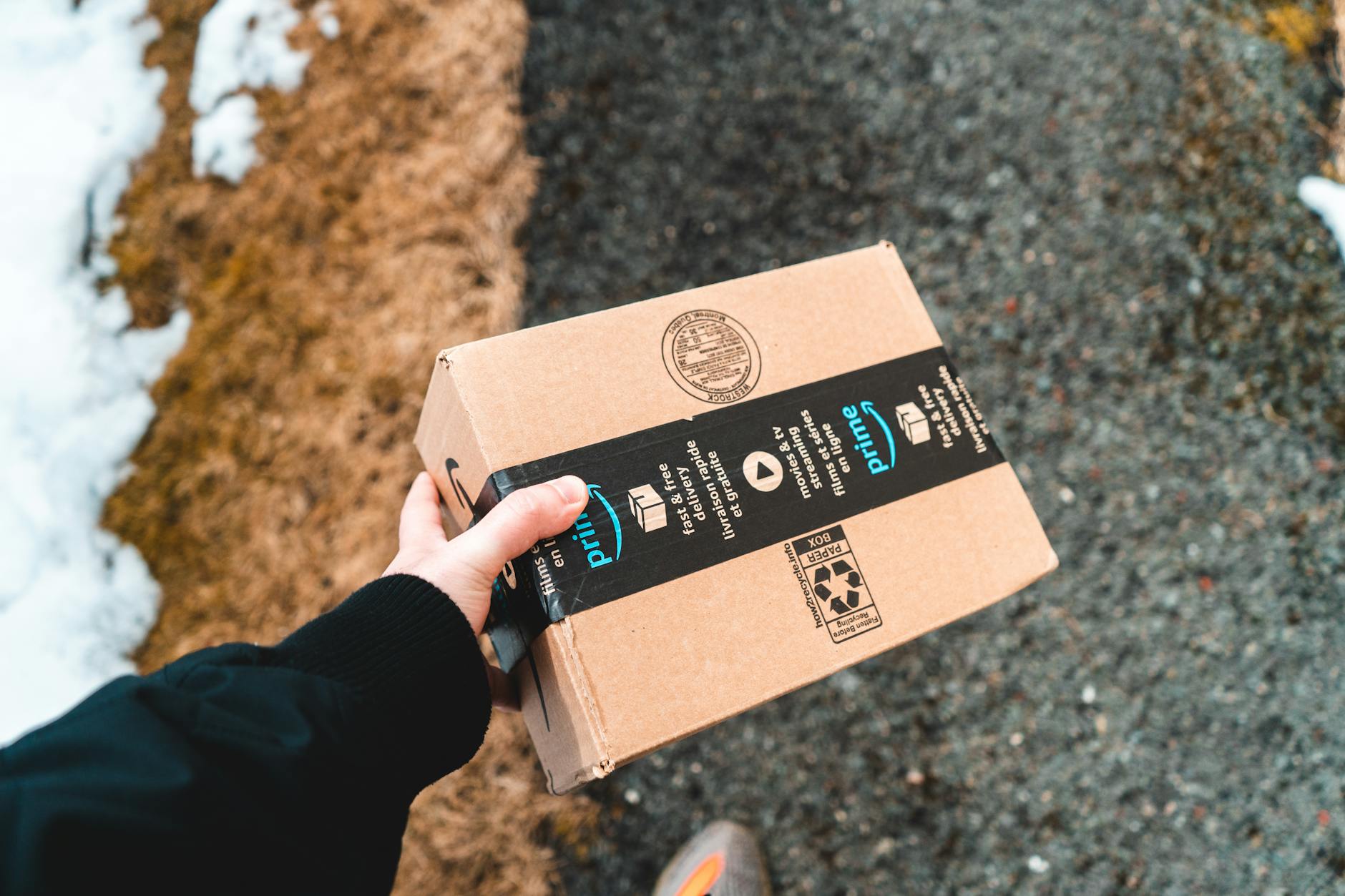
A person holding a cardboard Amazon Prime package on a snowy urban sidewalk.
Photo by Erik Mclean on Pexels

When you’re building an e-commerce business on Amazon, one of your most critical decisions comes down to fulfillment strategy. Do you let Amazon handle everything through Fulfillment by Amazon (FBA), or do you maintain control by fulfilling orders yourself? This fba vs self fulfillment cost comparison determines not just your profit margins, but your entire operational model.

Amazon FBA means you ship your inventory to Amazon’s warehouses, and they handle storage, picking, packing, shipping, customer service, and returns. You pay fees for these services, but you gain access to Amazon Prime eligibility and the trust that comes with Amazon’s logistics network.

Self-fulfillment (also called Fulfillment by Merchant or FBM) means you store inventory in your own space—whether that’s a garage, warehouse, or third-party logistics provider—and you handle every order yourself. You control the entire customer experience, but you’re also responsible for every operational detail.

The choice isn’t always obvious. A seller moving 50 units monthly faces completely different economics than one shipping 5,000 units. Product dimensions matter enormously—a small jewelry item has radically different storage costs than a large home goods product. And your growth trajectory changes the calculation entirely.

“The right fulfillment model at 100 orders per month can become the wrong one at 1,000 orders per month—and switching mid-growth is expensive.”

The Complete Cost Breakdown: FBA vs Self-Fulfillment

A pen pointing to a financial graph showing sales and total costs.
Photo by Kindel Media on Pexels

Let’s start with the numbers that most directly impact your bottom line. Understanding the true fba vs self fulfillment cost comparison requires looking at every fee category, not just the obvious ones.

Amazon FBA Fee Structure

FBA fees break down into several categories that compound quickly:

Fee Type Cost Range What It Covers
Fulfillment Fees $3.22 – $8.40+ per unit Picking, packing, shipping, customer service
Monthly Storage $0.87 – $2.40 per cubic foot Warehouse space (varies by season)
Long-term Storage $6.90 per cubic foot Items stored 271+ days
Removal/Disposal $0.50 – $1.40 per unit Returning or destroying inventory
Inbound Placement $0.27 – $1.58 per unit Distributing inventory across warehouses

For a standard small item (under 1 lb, under 15″ x 12″ x 0.75″), you’re looking at approximately $3.22 per fulfillment. A large standard item (1-2 lbs, under 18″ x 14″ x 8″) jumps to around $5.14. Oversized items can exceed $10 per unit.

Storage costs escalate during Q4 (October-December) when Amazon nearly triples monthly storage fees to handle holiday demand. A product occupying 1 cubic foot costs $0.87/month from January-September, but $2.40/month during peak season.

Self-Fulfillment Cost Structure

Self-fulfillment costs are more variable and depend heavily on your setup:

1
Storage Space
If using your own space: $0-$500/month depending on whether you’re using a spare room, renting a storage unit, or leasing warehouse space. Third-party fulfillment: $50-$200 per pallet per month.
2
Shipping Costs
Direct carrier rates: $4-$12 per package for domestic ground shipping, depending on weight, zone, and negotiated rates. International shipping adds significant complexity and cost.
3
Packing Materials
Boxes, bubble wrap, tape, labels: $0.50-$2.00 per order depending on product size and protection requirements.
4
Labor Costs
Your time or employee wages: $15-$25/hour for picking, packing, and shipping. At scale, this becomes your largest variable cost.
5
Software and Tools
Shipping software, inventory management, label printers: $50-$300/month. Tools like shipping automation software can streamline operations significantly.
$6.50 – $9.00
Average all-in cost per self-fulfilled order for small to medium-sized products when factoring in all expenses

The critical insight: self-fulfillment costs scale linearly with volume, while FBA costs include fixed components that become more efficient at higher volumes. However, FBA’s per-unit costs are generally higher, meaning there’s a crossover point where self-fulfillment becomes more expensive.

Hidden Costs Most Sellers Miss in Their FBA vs Self Fulfillment Cost Comparison

The visible fees are only part of the equation. Both fulfillment models carry hidden costs that can dramatically shift your true profitability.

FBA’s Hidden Cost Traps

Stranded Inventory Fees: If your listing becomes inactive while inventory sits in Amazon’s warehouse, you continue paying storage fees without generating sales. Amazon charges removal fees to get your inventory back, creating a lose-lose scenario.

Inventory Placement Fees: Amazon’s Inbound Placement Service Fee (launched in 2024) charges sellers to distribute inventory across multiple fulfillment centers. Opting out means Amazon chooses a single destination, often far from your customers, resulting in slower delivery times and reduced Prime appeal.

Dimensional Weight Pricing: Amazon measures both actual weight and dimensional weight (length x width x height / 139), then charges based on whichever is greater. A lightweight but bulky item can cost 3-4x more to fulfill than expected.

Returns Processing: While Amazon handles returns, they charge you for return shipping and restocking. If a customer damages a product and returns it, you lose both the product and pay the return fees. High return rates in categories like apparel can destroy margins.

Commingling Risk: When you use Amazon’s standard inventory system, your products mix with identical products from other sellers. If another seller sends in counterfeit or damaged goods, you might ship their defective products to your customers, resulting in negative reviews and account health issues.

Key Takeaway

Long-term storage fees accumulate fast—products sitting in FBA for 271+ days cost $6.90 per cubic foot, which can exceed the product’s profit margin for slow-moving inventory.

Self-Fulfillment’s Hidden Cost Traps

Time Opportunity Cost: Every hour you spend packing boxes is an hour not spent on product research, marketing, or business development. At 50 orders daily, you’re looking at 15-20 hours weekly just on fulfillment operations.

Shipping Rate Disadvantage: Amazon negotiates carrier rates that individual sellers can’t match. The difference between Amazon’s negotiated rate and your direct carrier rate can be $2-$4 per package—a significant margin hit at volume.

Prime Eligibility Loss: Non-FBA sellers can access Seller Fulfilled Prime, but the requirements are stringent: 99% on-time delivery, less than 1% cancellation rate, and same-day or next-day shipping. Most self-fulfilled sellers can’t maintain these standards, losing access to Prime customers who convert at significantly higher rates.

Customer Service Load: You handle all customer inquiries, complaints, and returns. This requires time, systems, and often results in higher refund rates than FBA because customers trust Amazon’s return process more than an individual seller’s.

Scaling Friction: Growing from 100 to 500 orders monthly is manageable. Growing from 500 to 2,000 requires hiring staff, implementing warehouse management systems, and potentially moving to commercial space. These transitions are expensive and operationally complex.

For sellers looking to optimize their self-fulfillment operations, implementing fulfillment automation can significantly reduce hidden labor costs and errors.

When Does Each Model Make Financial Sense? Volume-Based Analysis

Colorful pie charts on paper with office supplies on a desk, illustrating financial data analysis.
Photo by RDNE Stock project on Pexels

The fba vs self fulfillment cost comparison shifts dramatically based on your order volume. Let’s break down the economics at different scales.

Low Volume (1-100 Orders Monthly)

At this stage, self-fulfillment almost always wins financially. Your time investment is manageable—perhaps 5-10 hours monthly—and you avoid FBA’s monthly storage fees that eat into margins when turnover is slow.

Example calculation for a $25 product (1 lb, 12″ x 9″ x 3″):

  • FBA costs: $3.50 fulfillment + $0.30 storage (monthly average) = $3.80 per unit
  • Self-fulfillment costs: $1.00 packing materials + $5.50 shipping + $2.00 labor (15 minutes at $8/hour) = $8.50 per unit

Wait—self-fulfillment appears more expensive here. But this overlooks shipping rate negotiations and the fact that at low volumes, you’re likely using retail carrier rates. With a business account and discounted rates (typically 20-30% off retail), self-fulfillment drops to around $7.00 per unit.

More importantly, at 50 units monthly, FBA charges approximately $15-$25 in monthly storage fees even if products turn quickly. Self-fulfillment storage cost: $0 if you’re using existing space.

Medium Volume (100-500 Orders Monthly)

This is the inflection point where the fba vs self fulfillment cost comparison becomes genuinely complex. FBA starts making more financial sense, but operational factors matter enormously.

250-300
Monthly order threshold where FBA typically becomes more cost-effective than self-fulfillment for standard-sized products

At 300 orders monthly, you’re spending 30-40 hours on fulfillment operations. If you value your time at $50/hour (a reasonable rate for business-building activities), that’s $1,500-$2,000 in opportunity cost. FBA eliminates this entirely.

However, if your products have high return rates, unusual dimensions, or slow turnover, self-fulfillment might still win. The calculation requires modeling your specific product characteristics and cost structure.

High Volume (500+ Orders Monthly)

At this scale, most sellers choose FBA or transition to a third-party logistics provider (3PL) rather than continuing to self-fulfill. The labor requirements become prohibitive, and shipping volume discounts don’t typically match Amazon’s negotiated rates.

The math at 1,000 orders monthly:

  • Self-fulfillment requires 100+ hours of labor monthly (picking, packing, shipping, customer service)
  • Even at $15/hour for warehouse labor, that’s $1,500+ in wages before payroll taxes and benefits
  • You need dedicated warehouse space, inventory management software, and potentially multiple staff members
  • FBA’s per-unit costs remain relatively fixed, making the economics increasingly favorable

The exception: sellers with very high-margin products (50%+ margins) or unique fulfillment requirements (custom packaging, personalization, fragile items requiring special handling) often continue self-fulfilling or use specialized 3PLs.

Understanding route optimization becomes critical at high volumes, whether you’re self-fulfilling or working with a 3PL to maximize efficiency.

Operational Pros and Cons: Beyond the Dollar Signs

The fba vs self fulfillment cost comparison isn’t purely financial. Operational considerations often matter more than marginal cost differences.

Amazon FBA Advantages

Prime Badge Access: Prime members spend 2-3x more annually than non-Prime members and convert at higher rates. The Prime badge is FBA’s most valuable benefit, effectively increasing your addressable market and conversion rate simultaneously.

Hands-Off Scaling: Going from 500 to 5,000 orders monthly requires zero additional effort from you. Amazon handles the entire capacity increase. This is genuinely transformative for sellers focused on product development and marketing rather than operations.

Multi-Channel Fulfillment: You can use FBA to fulfill orders from your own website, other marketplaces, or social commerce channels. Amazon charges additional fees, but you leverage their logistics network without maintaining separate inventory pools.

Customer Trust: Amazon’s brand carries significant weight. Customers trust FBA’s return process and shipping reliability, reducing pre-purchase anxiety and increasing conversion rates by 10-30% in many categories.

International Expansion: FBA makes selling internationally dramatically simpler. Amazon handles customs, local shipping, and returns in foreign markets, removing major barriers to global expansion.

Amazon FBA Disadvantages

Limited Brand Control: Your packaging arrives in Amazon boxes with Amazon branding. You lose opportunities for branded unboxing experiences, inserts, or upsell materials. For brand-building sellers, this is a significant disadvantage.

Inventory Velocity Pressure: Slow-moving inventory gets expensive quickly due to long-term storage fees. FBA works best for products with consistent, predictable demand. Seasonal products or experimental SKUs can become money pits.

Commingling Issues: Even if you use FBA labels, Amazon’s inventory system can create problems. Lost inventory, incorrect removals, and fulfillment errors are common, and Amazon’s reimbursement process is notoriously difficult.

Restricted Product Categories: Certain products can’t use FBA (hazmat, oversized items, products requiring special handling). If your product line includes restricted items, you’ll need a hybrid approach anyway.

Account Dependency: Your entire business depends on Amazon’s platform. Account suspensions, policy changes, or fee increases directly impact your operations with limited recourse.

Self-Fulfillment Advantages

Complete Brand Control: You control every customer touchpoint—packaging, inserts, thank-you notes, samples. This matters enormously for building brand loyalty and encouraging repeat purchases.

Inventory Flexibility: You can hold seasonal inventory without penalty, test new products without storage fee risk, and adjust stock levels based on your cash flow rather than Amazon’s fee structure.

Direct Customer Relationships: You collect customer data, handle inquiries personally, and build relationships that can translate to direct sales through your own channels. This data is valuable for future marketing and product development.

Cost Transparency: You see exactly where every dollar goes. This visibility helps identify optimization opportunities and makes financial planning more straightforward.

Quality Control: You inspect every product before shipping, ensuring quality standards. This reduces return rates and protects your brand reputation.

Key Takeaway

Self-fulfillment gives you complete control over customer experience and brand touchpoints, but this control comes at the cost of operational complexity and time investment that scales with volume.

Self-Fulfillment Disadvantages

Time Intensive: Fulfillment operations consume significant time, especially as volume grows. This time comes directly from business development, marketing, or product research activities.

Limited Prime Access: Seller Fulfilled Prime exists but has strict requirements. Most self-fulfilled sellers can’t maintain the performance metrics needed, losing access to Prime customers.

Scaling Challenges: Every volume increase requires operational adjustments. Hiring, training, implementing systems—these transitions are expensive and disruptive.

Shipping Cost Disadvantage: Individual sellers pay higher per-package rates than Amazon. This margin hit compounds with every order.

Geographic Limitations: Shipping from a single location means longer delivery times for distant customers. Amazon’s distributed fulfillment network provides 1-2 day delivery to most US addresses; self-fulfilled sellers typically can’t match this.

Sellers looking to optimize self-fulfillment operations should explore integrating multiple shipping carriers to access better rates and service options.

The Hybrid Approach: Can You Do Both?

Inspirational message 'You Can Do This' displayed on a blackboard with a bold yellow backdrop.
Photo by Brett Sayles on Pexels

Many sophisticated sellers use a hybrid model, leveraging both FBA and self-fulfillment strategically. This approach maximizes the benefits of each while minimizing weaknesses.

Common Hybrid Strategies

FBA for Fast Movers, Self-Fulfill for Slow Movers: Send high-velocity SKUs to FBA to capture Prime customers and minimize storage costs through rapid turnover. Self-fulfill slower-moving products to avoid long-term storage fees.

FBA for Standard Items, Self-Fulfill for Oversized: Use FBA for products under 20 lbs and standard dimensions. Self-fulfill oversized items where FBA fees become prohibitive.

FBA for Amazon, Self-Fulfill for Other Channels: Use FBA exclusively for Amazon orders while maintaining separate inventory for your website, Shopify store, or other marketplaces. This preserves brand control for direct customers while capturing Prime benefits on Amazon.

Seasonal Switching: Use FBA during Q4 when order volume peaks and your time is most valuable. Self-fulfill during slower months when you have capacity and can avoid peak-season storage fees.

Geographic Split: Use FBA for your primary market (typically the US) and self-fulfill for international orders where FBA coverage is limited or cost-prohibitive.

Hybrid Strategy Best For Complexity Level
Velocity-based split Multi-SKU sellers with varied turnover rates Medium
Size-based split Sellers with both standard and oversized products Low
Channel-based split Omnichannel sellers focused on brand building High
Seasonal switching Sellers with strong Q4 peaks Medium

Hybrid Model Challenges

While hybrid approaches offer flexibility, they introduce operational complexity:

  • Inventory Management: Tracking inventory across multiple locations requires sophisticated software and processes. Stock-outs become more likely when inventory is fragmented.
  • Forecasting Complexity: You need to predict demand separately for each fulfillment channel, complicating purchasing decisions and increasing the risk of overstock or stockouts.
  • Split Shipments: If a customer orders multiple items fulfilled from different locations, you either ship separately (increasing costs) or lose sales by requiring customers to place separate orders.
  • Performance Metrics: Amazon tracks performance separately for FBA and FBM. Poor self-fulfillment metrics can impact your overall account health even if your FBA performance is excellent.

For sellers managing complex hybrid fulfillment, platforms like ShipPost vs Shipstation can help centralize operations and reduce complexity.

Decision Framework: Which Fulfillment Model Fits Your Business?

Making the right choice in the fba vs self fulfillment cost comparison requires evaluating your specific business context. Use this framework to guide your decision.

Choose FBA If:

  • You’re selling 250+ units monthly with consistent demand
  • Your products are standard-sized (under 20 lbs, standard dimensions)
  • You have limited time for operations and want to focus on growth activities
  • Prime eligibility is critical for your category (consumer electronics, home goods, etc.)
  • You’re planning to scale rapidly and need infrastructure that grows automatically
  • Your profit margins can absorb FBA fees (typically need 40%+ margins)
  • You sell commodity products where brand differentiation is limited
  • You want to expand internationally without managing complex logistics

Choose Self-Fulfillment If:

  • You’re selling under 200 units monthly or have highly seasonal demand
  • Your products are oversized, fragile, or require special handling
  • Brand control and customer experience are central to your strategy
  • You have existing warehouse space and fulfillment capacity
  • Your products have high return rates where FBA fees become prohibitive
  • You’re building a multi-channel business and want unified inventory
  • You offer customization, personalization, or bundling that FBA can’t accommodate
  • You have tight cash flow and need to minimize fixed costs

Consider a Hybrid Approach If:

  • You have diverse product lines with different characteristics
  • You’re selling on multiple channels and want channel-specific strategies
  • You have some products with very high velocity and others with slow turnover
  • You’re transitioning between models and want to test before fully committing
  • You have operational capacity for self-fulfillment but want Prime access for key products

“The best fulfillment strategy isn’t static—it evolves with your business growth, product mix, and market conditions.”

The Financial Break-Even Analysis

To determine your specific break-even point, calculate your all-in costs for both models:

1
Calculate FBA Costs
Add fulfillment fees + monthly storage (amortized per unit) + long-term storage risk + inbound placement fees + estimated return costs
2
Calculate Self-Fulfillment Costs
Add shipping costs + packing materials + labor (actual time × opportunity cost rate) + storage costs + software costs (amortized per unit) + customer service time
3
Factor in Conversion Rate Differences
FBA typically converts 10-30% higher due to Prime badge. If FBA costs $1 more per unit but increases conversion by 15%, the effective cost difference may favor FBA.
4
Project at Different Volume Levels
Model costs at 100, 300, 500, and 1,000 units monthly. Your break-even point becomes clear when you see where the lines cross.

For sellers needing sophisticated shipping cost analysis, tools focused on cutting shipping costs for international orders can provide significant savings in self-fulfillment models.

Frequently Asked Questions

What is the average cost difference between FBA and self-fulfillment for a standard product?

For a typical 1-pound product in standard dimensions, FBA costs approximately $3.50-$4.50 per fulfillment including storage, while self-fulfillment costs $6.50-$9.00 when including all expenses (shipping, materials, labor, software). However, FBA’s higher conversion rates due to Prime eligibility often offset the cost difference. The break-even point typically occurs around 250-300 monthly orders, where FBA’s efficiency and Prime benefits outweigh the higher per-unit costs.

Can I switch from self-fulfillment to FBA without disrupting my Amazon business?

Yes, but the transition requires careful planning. Create your FBA shipment while maintaining self-fulfillment inventory to prevent stockouts. Ship inventory to Amazon 2-3 weeks before you want to switch, as FBA receiving can take 5-14 days. Keep your listings active with self-fulfillment until FBA inventory is live and available. The biggest risk is the receiving delay—if Amazon’s receiving time extends beyond expectations, you may experience stockouts that damage your Best Seller Rank and organic ranking.

How do FBA long-term storage fees impact the cost comparison?

Long-term storage fees ($6.90 per cubic foot for items stored 271+ days) can completely eliminate profitability on slow-moving inventory. A product occupying 2 cubic feet accumulates $13.80 in long-term storage fees alone, often exceeding the product’s profit margin. Self-fulfillment avoids these fees entirely, making it dramatically more cost-effective for seasonal products, slow movers, or experimental SKUs. Sellers using FBA must maintain aggressive inventory turnover to avoid these penalties.

What shipping volume do I need to negotiate better carrier rates for self-fulfillment?

Most major carriers (UPS, FedEx, USPS) offer business discounts starting at 20-50 shipments monthly, with deeper discounts at 100+ monthly shipments. At 500+ monthly shipments, you can negotiate rates 30-40% below retail pricing. However, even with these discounts, individual sellers rarely match Amazon’s negotiated rates. The key is comparing your negotiated rates against FBA’s all-in costs, not retail shipping rates, to make an accurate fba vs self fulfillment cost comparison.

Does self-fulfillment hurt my Amazon search ranking compared to FBA?

Amazon’s algorithm doesn’t directly penalize self-fulfilled listings, but FBA provides indirect ranking benefits. Prime eligibility increases conversion rates, and higher conversion rates improve organic ranking. FBA’s faster, more reliable shipping improves customer satisfaction metrics, which influence ranking. Self-fulfilled sellers can maintain competitive rankings by maintaining excellent performance metrics (on-time shipping, low defect rates, fast response times), but they work harder to achieve the same results FBA provides automatically.

Can I use FBA for Amazon orders and self-fulfill for my Shopify store?

Yes, this is a common hybrid strategy. You can maintain separate inventory pools or use Amazon’s Multi-Channel Fulfillment (MCF) to fulfill Shopify orders from your FBA inventory. MCF charges additional fees (typically $1-$2 more per order than standard FBA) but provides fast fulfillment without maintaining separate inventory. The tradeoff: MCF shipments arrive in Amazon-branded packaging, which may not align with your brand strategy for direct-to-consumer orders from your own website.

How do return rates differ between FBA and self-fulfillment?

Return rates are typically 10-20% lower with FBA because customers trust Amazon’s return process and shipping speed reduces buyer’s remorse. However, FBA charges you for return shipping and processing, while self-fulfilled returns give you more control over the return decision and potential restocking. In high-return categories like apparel or electronics, these fees can significantly impact your fba vs self fulfillment cost comparison. Self-fulfillment allows you to inspect returns before issuing refunds, potentially reducing fraudulent returns.

What happens to my FBA inventory if my Amazon account gets suspended?

If your account is suspended, you can still request inventory removal, but you cannot sell it on Amazon. Amazon charges removal fees ($0.50-$1.40 per unit) to return inventory to you. This represents a significant risk for FBA-dependent sellers—your entire inventory becomes inaccessible during suspension appeals, which can take weeks or months. Self-fulfilled sellers maintain complete inventory control regardless of account status, making this a critical risk consideration for businesses heavily dependent on Amazon.

{
“@context”: “https://schema.org”,
“@type”: “FAQPage”,
“mainEntity”: [
{
“@type”: “Question”,
“name”: “What is the average cost difference between FBA and self-fulfillment for a standard product?”,
“acceptedAnswer”: {
“@type”: “Answer”,
“text”: “For a typical 1-pound product in standard dimensions, FBA costs approximately $3.50-$4.50 per fulfillment including storage, while self-fulfillment costs $6.50-$9.00 when including all expenses (shipping, materials, labor, software). However, FBA’s higher conversion rates due to Prime eligibility often offset the cost difference. The break-even point typically occurs around 250-300 monthly orders, where FBA’s efficiency and Prime benefits outweigh the higher per-unit costs.”
}
},
{
“@type”: “Question”,
“name”: “Can I switch from self-fulfillment to FBA without disrupting my Amazon business?”,
“acceptedAnswer”: {
“@type”: “Answer”,
“text”: “Yes, but the transition requires careful planning. Create your FBA shipment while maintaining self-fulfillment inventory to prevent stockouts. Ship inventory to Amazon 2-3 weeks before you want to switch, as FBA receiving can take 5-14 days. Keep your listings active with self-fulfillment until FBA inventory is live and available. The biggest risk is the receiving delayu2014if Amazon’s receiving time extends beyond expectations, you may experience stockouts that damage your Best Seller Rank and organic ranking.”
}
},
{
“@type”: “Question”,
“name”: “How do FBA long-term storage fees impact the cost comparison?”,
“acceptedAnswer”: {
“@type”: “Answer”,
“text”: “Long-term storage fees ($6.90 per cubic foot for items stored 271+ days) can completely eliminate profitability on slow-moving inventory. A product occupying 2 cubic feet accumulates $13.80 in long-term storage fees alone, often exceeding the product’s profit margin. Self-fulfillment avoids these fees entirely, making it dramatically more cost-effective for seasonal products, slow movers, or experimental SKUs. Sellers using FBA must maintain aggressive inventory turnover to avoid these penalties.”
}
},
{
“@type”: “Question”,
“name”: “What shipping volume do I need to negotiate better carrier rates for self-fulfillment?”,
“acceptedAnswer”: {
“@type”: “Answer”,
“text”: “Most major carriers (UPS, FedEx, USPS) offer business discounts starting at 20-50 shipments monthly, with deeper discounts at 100+ monthly shipments. At 500+ monthly shipments, you can negotiate rates 30-40% below retail pricing. However, even with these discounts, individual sellers rarely match Amazon’s negotiated rates. The key is comparing your negotiated rates against FBA’s all-in costs, not retail shipping rates, to make an accurate fba vs self fulfillment cost comparison.”
}
},
{
“@type”: “Question”,
“name”: “Does self-fulfillment hurt my Amazon search ranking compared to FBA?”,
“acceptedAnswer”: {
“@type”: “Answer”,
“text”: “Amazon’s algorithm doesn’t directly penalize self-fulfilled listings, but FBA provides indirect ranking benefits. Prime eligibility increases conversion rates, and higher conversion rates improve organic ranking. FBA’s faster, more reliable shipping improves customer satisfaction metrics, which influence ranking. Self-fulfilled sellers can maintain competitive rankings by maintaining excellent performance metrics (on-time shipping, low defect rates, fast response times), but they work harder to achieve the same results FBA provides automatically.”
}
},
{
“@type”: “Question”,
“name”: “Can I use FBA for Amazon orders and self-fulfill for my Shopify store?”,
“acceptedAnswer”: {
“@type”: “Answer”,
“text”: “Yes, this is a common hybrid strategy. You can maintain separate inventory pools or use Amazon’s Multi-Channel Fulfillment (MCF) to fulfill Shopify orders from your FBA inventory. MCF charges additional fees (typically $1-$2 more per order than standard FBA) but provides fast fulfillment without maintaining separate inventory. The tradeoff: MCF shipments arrive in Amazon-branded packaging, which may not align with your brand strategy for direct-to-consumer orders from your own website.”
}
},
{
“@type”: “Question”,
“name”: “How do return rates differ between FBA and self-fulfillment?”,
“acceptedAnswer”: {
“@type”: “Answer”,
“text”: “Return rates are typically 10-20% lower with FBA because customers trust Amazon’s return process and shipping speed reduces buyer’s remorse. However, FBA charges you for return shipping and processing, while self-fulfilled returns give you more control over the return decision and potential restocking. In high-return categories like apparel or electronics, these fees can significantly impact your fba vs self fulfillment cost comparison. Self-fulfillment allows you to inspect returns before issuing refunds, potentially reducing fraudulent returns.”
}
},
{
“@type”: “Question”,
“name”: “What happens to my FBA inventory if my Amazon account gets suspended?”,
“acceptedAnswer”: {
“@type”: “Answer”,
“text”: “If your account is suspended, you can still request inventory removal, but you cannot sell it on Amazon. Amazon charges removal fees ($0.50-$1.40 per unit) to return inventory to you. This represents a significant risk for FBA-dependent sellersu2014your entire inventory becomes inaccessible during suspension appeals, which can take weeks or months. Self-fulfilled sellers maintain complete inventory control regardless of account status, making this a critical risk consideration for businesses heavily dependent on Amazon.”
}
}
]
}

{“@context”: “https://schema.org”, “@type”: “Article”, “headline”: “Fulfillment for Amazon FBA vs Self-Fulfillment: Costs, Pros, and Cons”, “description”: “Complete fba vs self fulfillment cost comparison for 2025. Real numbers, break-even analysis, and decision framework to choose the right fulfillment model for your Amazon business.”, “datePublished”: “2026-06-27T14:04:26+00:00”, “dateModified”: “2026-06-27T14:04:26+00:00”, “url”: “https://pixelpanda.ai/blog/fba-vs-self-fulfillment-cost-comparison-complete-guide/”, “mainEntityOfPage”: {“@type”: “WebPage”, “@id”: “https://pixelpanda.ai/blog/fba-vs-self-fulfillment-cost-comparison-complete-guide/”}, “keywords”: “fba vs self fulfillment cost comparison”, “publisher”: {“@type”: “Organization”, “name”: “pixelpanda.ai”, “url”: “https://pixelpanda.ai”}}
{“@context”: “https://schema.org”, “@type”: “FAQPage”, “mainEntity”: [{“@type”: “Question”, “name”: “What is the average cost difference between FBA and self-fulfillment for a standard product?”, “acceptedAnswer”: {“@type”: “Answer”, “text”: “For a typical 1-pound product in standard dimensions, FBA costs approximately $3.50-$4.50 per fulfillment including storage, while self-fulfillment costs $6.50-$9.00 when including all expenses (shipping, materials, labor, software). However, FBA’s higher conversion rates due to Prime eligibility often offset the cost difference. The break-even point typically occurs around 250-300 monthly orders, where FBA’s efficiency and Prime benefits outweigh the higher per-unit costs.”}}, {“@type”: “Question”, “name”: “Can I switch from self-fulfillment to FBA without disrupting my Amazon business?”, “acceptedAnswer”: {“@type”: “Answer”, “text”: “Yes, but the transition requires careful planning. Create your FBA shipment while maintaining self-fulfillment inventory to prevent stockouts. Ship inventory to Amazon 2-3 weeks before you want to switch, as FBA receiving can take 5-14 days. Keep your listings active with self-fulfillment until FBA inventory is live and available. The biggest risk is the receiving delay—if Amazon’s receiving time extends beyond expectations, you may experience stockouts that damage your Best Seller Rank and organic ranking.”}}, {“@type”: “Question”, “name”: “How do FBA long-term storage fees impact the cost comparison?”, “acceptedAnswer”: {“@type”: “Answer”, “text”: “Long-term storage fees ($6.90 per cubic foot for items stored 271+ days) can completely eliminate profitability on slow-moving inventory. A product occupying 2 cubic feet accumulates $13.80 in long-term storage fees alone, often exceeding the product’s profit margin. Self-fulfillment avoids these fees entirely, making it dramatically more cost-effective for seasonal products, slow movers, or experimental SKUs. Sellers using FBA must maintain aggressive inventory turnover to avoid these penalties.”}}, {“@type”: “Question”, “name”: “What shipping volume do I need to negotiate better carrier rates for self-fulfillment?”, “acceptedAnswer”: {“@type”: “Answer”, “text”: “Most major carriers (UPS, FedEx, USPS) offer business discounts starting at 20-50 shipments monthly, with deeper discounts at 100+ monthly shipments. At 500+ monthly shipments, you can negotiate rates 30-40% below retail pricing. However, even with these discounts, individual sellers rarely match Amazon’s negotiated rates. The key is comparing your negotiated rates against FBA’s all-in costs, not retail shipping rates, to make an accurate fba vs self fulfillment cost comparison.”}}, {“@type”: “Question”, “name”: “Does self-fulfillment hurt my Amazon search ranking compared to FBA?”, “acceptedAnswer”: {“@type”: “Answer”, “text”: “Amazon’s algorithm doesn’t directly penalize self-fulfilled listings, but FBA provides indirect ranking benefits. Prime eligibility increases conversion rates, and higher conversion rates improve organic ranking. FBA’s faster, more reliable shipping improves customer satisfaction metrics, which influence ranking. Self-fulfilled sellers can maintain competitive rankings by maintaining excellent performance metrics (on-time shipping, low defect rates, fast response times), but they work harder to achieve the same results FBA provides automatically.”}}, {“@type”: “Question”, “name”: “Can I use FBA for Amazon orders and self-fulfill for my Shopify store?”, “acceptedAnswer”: {“@type”: “Answer”, “text”: “Yes, this is a common hybrid strategy. You can maintain separate inventory pools or use Amazon’s Multi-Channel Fulfillment (MCF) to fulfill Shopify orders from your FBA inventory. MCF charges additional fees (typically $1-$2 more per order than standard FBA) but provides fast fulfillment without maintaining separate inventory. The tradeoff: MCF shipments arrive in Amazon-branded packaging, which may not align with your brand strategy for direct-to-consumer orders from your own website.”}}, {“@type”: “Question”, “name”: “How do return rates differ between FBA and self-fulfillment?”, “acceptedAnswer”: {“@type”: “Answer”, “text”: “Return rates are typically 10-20% lower with FBA because customers trust Amazon’s return process and shipping speed reduces buyer’s remorse. However, FBA charges you for return shipping and processing, while self-fulfilled returns give you more control over the return decision and potential restocking. In high-return categories like apparel or electronics, these fees can significantly impact your fba vs self fulfillment cost comparison. Self-fulfillment allows you to inspect returns before issuing refunds, potentially reducing fraudulent returns.”}}, {“@type”: “Question”, “name”: “What happens to my FBA inventory if my Amazon account gets suspended?”, “acceptedAnswer”: {“@type”: “Answer”, “text”: “If your account is suspended, you can still request inventory removal, but you cannot sell it on Amazon. Amazon charges removal fees ($0.50-$1.40 per unit) to return inventory to you. This represents a significant risk for FBA-dependent sellers—your entire inventory becomes inaccessible during suspension appeals, which can take weeks or months. Self-fulfilled sellers maintain complete inventory control regardless of account status, making this a critical risk consideration for businesses heavily dependent on Amazon.”}}]}

Try PixelPanda

Remove backgrounds, upscale images, and create stunning product photos with AI.