Table of Contents
- Why AI Route Optimization Matters for Last-Mile Delivery
- How AI Route Optimization Actually Works
- Step-by-Step Implementation Guide
- Cost Analysis: AI vs Traditional Route Planning
- Integration with E-Commerce Platforms
- Measuring ROI and Performance Metrics
- Common Implementation Mistakes to Avoid
- Frequently Asked Questions
Why AI Route Optimization Matters for Last-Mile Delivery
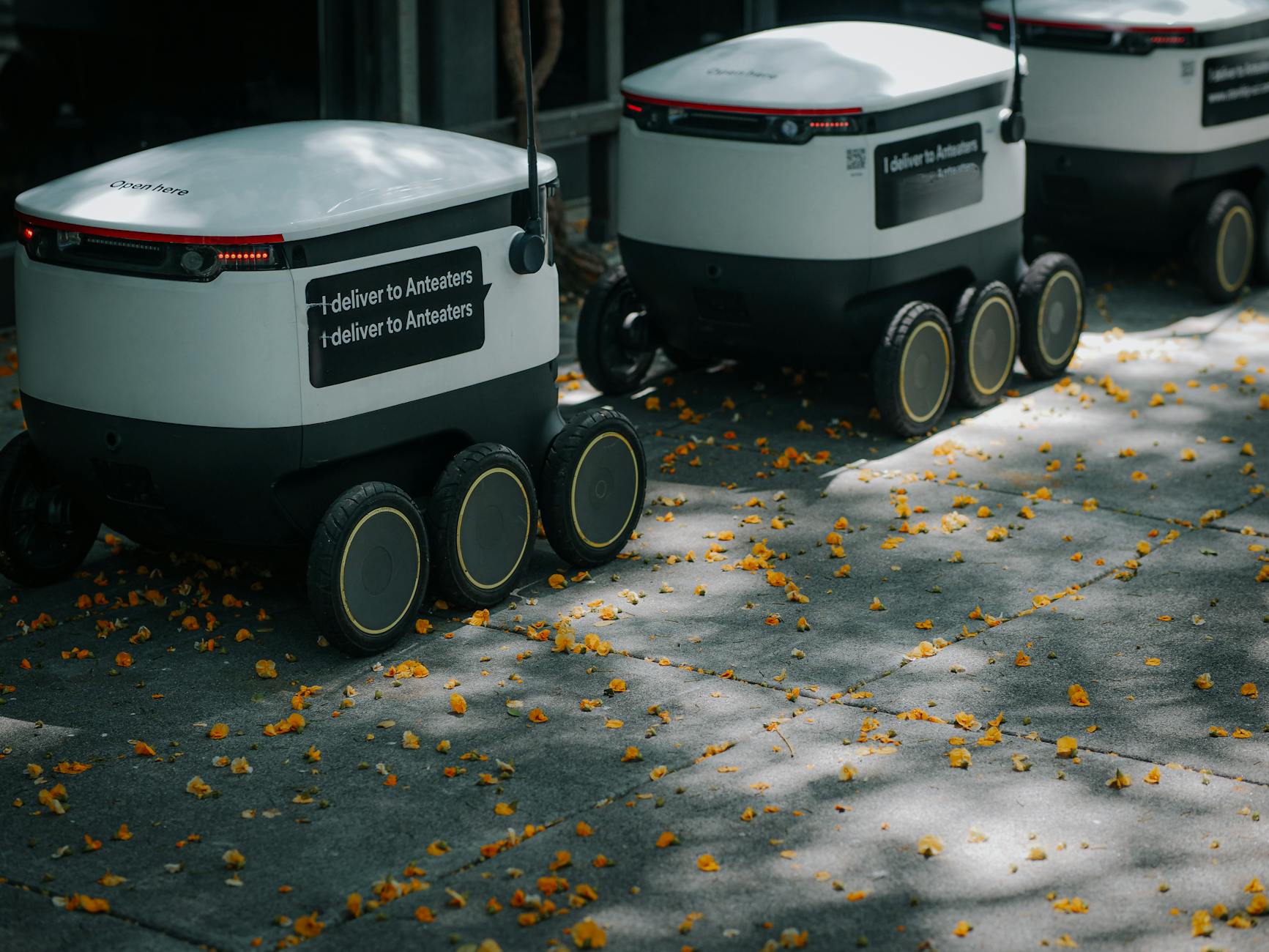
Last-mile delivery accounts for 53% of total shipping costs, yet most small to mid-sized e-commerce businesses still rely on manual route planning or basic mapping tools. The financial impact is staggering: a company making 100 deliveries per day can waste $15,000-$25,000 annually on inefficient routes alone.
AI route optimization delivery transforms this equation by analyzing thousands of variables simultaneously—traffic patterns, delivery windows, vehicle capacity, driver schedules, and historical performance data—to generate mathematically optimal routes in seconds. This isn’t about incremental improvements; businesses implementing AI-powered logistics automation report 20-30% reductions in fuel costs and 15-25% increases in daily delivery capacity within the first quarter.
The competitive advantage extends beyond cost savings. Customer expectations have shifted dramatically—67% of online shoppers now expect delivery within three days or less, and 41% will abandon a brand after just one late delivery. AI route optimization directly addresses this by improving on-time delivery rates from typical industry averages of 85-90% to 95-98%.
For businesses operating multi-channel fulfillment across platforms like Shopify, Amazon, and Etsy, the complexity multiplies exponentially. Traditional route planning breaks down when you’re juggling 200+ daily orders with varying delivery windows, return pickups, and dynamic customer preferences. This is where logistics automation becomes non-negotiable rather than optional.
Key Takeaway
AI route optimization isn’t just about saving fuel—it’s about scaling delivery capacity without proportionally increasing operational costs.
How AI Route Optimization Actually Works

Understanding the mechanics behind AI route optimization helps you evaluate platforms and set realistic implementation expectations. Unlike basic GPS routing that simply finds the shortest path between two points, AI-powered systems solve what mathematicians call the “vehicle routing problem with time windows” (VRPTW)—one of the most computationally complex optimization challenges.
The Core Algorithm Components
Modern AI route optimization delivery systems combine three algorithmic approaches:
Machine learning models analyze historical delivery data to predict accurate completion times for each stop. The system learns that deliveries to apartment complexes take 8 minutes on average versus 3 minutes for single-family homes, or that specific neighborhoods have parking challenges that add 5-7 minutes per stop. This predictive accuracy improves continuously as the system processes more deliveries.
Constraint satisfaction algorithms handle the hard rules: delivery time windows, vehicle capacity limits, driver shift schedules, restricted access zones, and customer preferences. A sophisticated system can simultaneously optimize for 15-20 different constraints while maintaining mathematical feasibility.
Real-time optimization engines dynamically adjust routes throughout the day as conditions change. When a driver encounters unexpected traffic, a customer requests a time change, or a new priority order arrives, the system recalculates optimal routes for all active vehicles in under 10 seconds.
| Optimization Factor | Impact on Route Efficiency | Data Required |
|---|---|---|
| Traffic Patterns | 12-18% time reduction | Real-time traffic APIs, historical congestion data |
| Delivery Time Windows | 8-15% capacity increase | Customer preferences, business hours |
| Stop Duration Prediction | 10-12% accuracy improvement | Historical completion times by location type |
| Vehicle Capacity | 15-20% load optimization | Package dimensions, weight, vehicle specs |
Data Integration and Processing
The effectiveness of AI route optimization depends entirely on data quality and integration depth. The system needs to ingest information from multiple sources:
Your order management system provides delivery addresses, time windows, package specifications, and priority levels. E-commerce platforms like Shopify or WooCommerce feed this data automatically when properly integrated with fulfillment automation software.
GPS and traffic data services (Google Maps API, HERE Technologies, or TomTom) supply real-time traffic conditions, road closures, and historical congestion patterns. Premium AI systems analyze traffic data at 15-minute intervals throughout the day to identify optimal departure times.
Driver mobile apps capture actual completion times, delivery exceptions, customer feedback, and geolocation data. This feedback loop trains the machine learning models to improve predictions continuously.
“The difference between basic route optimization and AI-powered systems is like comparing a calculator to a chess grandmaster—both can solve problems, but only one adapts and improves with experience.”
The Optimization Cycle
AI route optimization operates in continuous cycles rather than one-time calculations. Each morning, the system generates initial routes based on scheduled deliveries. As drivers begin their routes, the system monitors progress and compares predicted versus actual performance. When deviations occur—a delivery takes longer than expected, traffic slows unexpectedly, or a new urgent order arrives—the optimization engine recalculates routes for all affected vehicles.
This dynamic reoptimization capability separates enterprise-grade AI systems from basic routing tools. A static route calculated at 7 AM becomes obsolete by 10 AM as real-world conditions change. AI systems that support real-time shipment tracking can adjust routes mid-day without requiring manual dispatcher intervention.
Key Takeaway
Effective AI route optimization requires deep integration with your existing systems—it’s not a standalone tool but a central nervous system for your delivery operations.
Step-by-Step Implementation Guide
Implementing AI route optimization requires methodical planning and staged rollout. Companies that rush implementation without proper preparation typically see 40-60% lower ROI in the first six months compared to those following a structured approach.
Phase 1: Data Preparation and Audit (Weeks 1-2)
Export 3-6 months of historical delivery records including addresses, completion times, driver assignments, and any recorded issues or delays. This baseline data reveals patterns that will inform your optimization strategy.
AI systems require clean, consistent address data. Run your address database through validation tools to correct errors, standardize formats, and add missing geocodes. Poor address quality is the #1 reason for failed AI implementations.
Create a comprehensive list of all operational rules: delivery time windows by customer type, vehicle capacity specifications, driver shift schedules, restricted zones, and any special handling requirements.
Identify all systems that need to integrate: order management, warehouse management, driver mobile apps, customer notification systems, and accounting software. Document API availability and data flow requirements.
Phase 2: Platform Selection and Configuration (Weeks 3-4)
Choosing the right AI route optimization platform requires evaluating capabilities against your specific operational needs. Not all platforms are created equal—some excel at high-volume urban delivery while others optimize for sparse rural routes.
Key evaluation criteria include:
- Scalability limits: Can the system handle your current volume plus 3x growth? Most platforms have hard limits on daily stops or vehicles.
- Integration depth: Does it offer native integrations with your e-commerce platform, or will you need custom API development? Platforms like ShipPost offer pre-built integrations with Shopify, WooCommerce, and major marketplaces.
- Real-time capabilities: Can it reoptimize routes dynamically during the delivery day, or only generate static morning routes?
- Mobile app quality: Driver adoption determines success—test the mobile interface extensively with actual drivers before committing.
- Reporting and analytics: What KPIs does the platform track? Can you export data for custom analysis?
During configuration, start with conservative settings. Enable basic optimization features first—route sequencing, time window compliance, and capacity constraints. Advanced features like dynamic reoptimization and multi-depot routing can be activated after your team masters the fundamentals.
Phase 3: Pilot Testing (Weeks 5-6)
Never roll out AI route optimization to your entire fleet simultaneously. Run a controlled pilot with 2-3 vehicles and 20-30% of your daily delivery volume.
During the pilot, maintain parallel operations—generate both AI-optimized routes and traditional routes, then compare performance metrics daily. Track these specific measurements:
- Total miles driven per route
- Average stops per hour
- On-time delivery percentage
- Fuel consumption per delivery
- Driver feedback and adoption issues
- Customer satisfaction scores
Expect a learning curve. First-week performance often shows minimal improvement as drivers adjust to new routing patterns and the AI system learns your operational nuances. Real gains typically emerge in weeks 3-4 as machine learning models accumulate sufficient data.
Key Takeaway
Pilot testing isn’t about proving the technology works—it’s about identifying configuration gaps and training needs before full deployment.
Phase 4: Full Deployment and Optimization (Weeks 7-12)
After validating pilot results, expand to your full fleet in stages. Deploy to one additional vehicle or route per week, allowing time to address issues before they compound.
Establish weekly optimization review sessions where you analyze performance data and adjust system parameters. Common tuning adjustments include:
- Refining service time estimates for different location types
- Adjusting traffic pattern weights for specific time windows
- Fine-tuning driver break schedules and depot return times
- Calibrating the balance between route efficiency and delivery time windows
Integration with real-time order tracking systems becomes critical during full deployment. Customers expect accurate ETAs that update as routes change—static delivery windows no longer meet market expectations.
Cost Analysis: AI vs Traditional Route Planning

The financial case for AI route optimization becomes compelling when you calculate total cost of ownership over 12-24 months rather than focusing solely on software subscription fees.
Direct Cost Savings
For a typical e-commerce business operating 5 delivery vehicles making 75 stops per day, the cost breakdown looks like this:
Fuel costs: Manual routing averages 180 miles per vehicle daily. AI optimization reduces this to 135-145 miles—a 20-25% reduction. At current fuel prices ($3.50/gallon) and 12 MPG efficiency, this saves $2,100-$2,625 per vehicle annually, or $10,500-$13,125 for a 5-vehicle fleet.
Labor costs: Increased route efficiency allows drivers to complete 15-20% more deliveries per shift. This either reduces overtime costs (saving $8,000-$12,000 annually per driver) or increases revenue capacity without adding headcount.
Vehicle maintenance: Reduced mileage directly decreases maintenance frequency. A vehicle driving 35 fewer miles daily saves approximately $1,200-$1,500 annually in maintenance costs (oil changes, tire wear, brake service).
Dispatcher time: Manual route planning consumes 2-3 hours daily for a dispatcher managing 5 vehicles. AI automation recovers this time for higher-value activities like exception handling and customer service—worth $15,000-$20,000 annually in labor reallocation.
Software Investment
AI route optimization platforms typically charge based on monthly active vehicles and delivery volume:
- Entry-level plans: $100-$200/month for up to 3 vehicles and 500 stops
- Mid-market plans: $400-$800/month for 5-10 vehicles and 2,000+ stops
- Enterprise plans: $1,500-$3,000/month for unlimited vehicles and advanced features
Implementation costs add $2,000-$5,000 for initial setup, training, and system integration. For businesses already using modern shipping software for multi-channel sellers, integration complexity is minimal.
| Cost Category | Annual Manual Cost | Annual AI-Optimized Cost | Net Savings |
|---|---|---|---|
| Fuel (5 vehicles) | $52,500 | $40,000 | $12,500 |
| Overtime Labor | $48,000 | $36,000 | $12,000 |
| Vehicle Maintenance | $15,000 | $11,000 | $4,000 |
| Dispatcher Labor | $18,000 | $3,000 | $15,000 |
| Software Cost | $0 | $7,200 | -$7,200 |
| Total Annual Cost | $133,500 | $97,200 | $36,300 |
Hidden Revenue Impact
Beyond direct cost savings, AI route optimization generates revenue through increased capacity and improved customer retention. A fleet completing 20% more deliveries daily without adding vehicles can handle $150,000-$250,000 in additional annual revenue (assuming $20-$30 average order value and 250 delivery days).
Customer retention improvements are harder to quantify but equally significant. Businesses implementing AI route optimization report 12-18% decreases in delivery-related customer complaints and 8-12% improvements in Net Promoter Scores. For an e-commerce business with 25% annual customer churn, reducing churn by even 3 percentage points translates to substantial lifetime value gains.
Integration with E-Commerce Platforms
AI route optimization delivers maximum value when deeply integrated with your entire e-commerce technology stack. Isolated systems create data silos that undermine optimization effectiveness.
Order Management System Integration
The connection between your OMS and route optimization platform should be bidirectional and real-time. Orders flow automatically from your e-commerce platform (Shopify, WooCommerce, BigCommerce) into the routing system, while delivery status updates flow back to update order records and trigger customer notifications.
Critical data elements that must sync include:
- Customer delivery address with geocoding
- Requested delivery time windows
- Package dimensions and weight
- Special handling instructions
- Order priority level
- Customer contact information
Platforms like ShipPost provide native integrations with major e-commerce platforms, eliminating the need for custom middleware development. The integration should support both scheduled batch imports (for overnight order processing) and real-time webhooks (for same-day delivery orders).
Warehouse Management System Coordination
Route optimization begins before drivers leave the warehouse. Integration with your WMS ensures that picking, packing, and loading sequences align with optimized delivery routes.
Advanced implementations use route data to generate optimized pick lists—orders are picked in the sequence they’ll be loaded onto vehicles, and vehicle loading mirrors the delivery sequence. This coordination reduces warehouse dwell time by 15-25% and eliminates the common problem of drivers searching for packages buried in their vehicle.
Customer Communication Automation
Modern customers expect proactive delivery communication. Your route optimization platform should automatically trigger notifications at key milestones:
- Order out for delivery (morning notification with estimated time window)
- Driver 30 minutes away (SMS alert with real-time ETA)
- Delivery completed (confirmation with photo proof)
- Delivery exception (immediate alert with resolution options)
These notifications should pull data directly from the route optimization system to ensure accuracy. Static ETAs calculated at route generation become obsolete as the delivery day progresses—only real-time tracking provides the accuracy customers demand. Learn more about implementing real-time shipping tracking for your business.
Key Takeaway
Integration depth determines optimization effectiveness—a standalone routing tool delivers 30-40% less value than a fully integrated logistics platform.
Multi-Carrier Management
Many e-commerce businesses use hybrid fulfillment strategies—handling local deliveries with their own fleet while outsourcing distant or overflow orders to third-party carriers. Your route optimization system should intelligently route orders to the most cost-effective fulfillment method.
This requires integration with carrier APIs (UPS, FedEx, USPS) to compare real-time shipping rates and transit times against the cost of in-house delivery. The system should automatically assign orders to your fleet when you can deliver faster or cheaper, and hand off to carriers when that’s more economical.
For businesses operating across multiple sales channels, shipping cost reduction strategies become critical to maintaining profitability as order volume scales.
Measuring ROI and Performance Metrics

Effective performance measurement requires tracking both operational efficiency metrics and business outcome metrics. Many companies focus exclusively on operational KPIs (miles driven, stops per hour) while ignoring the ultimate business impacts (customer retention, revenue capacity).
Core Operational Metrics
Route efficiency score: Compare actual miles driven to the theoretical minimum mileage for the same stops. Scores above 85% indicate excellent optimization; below 70% suggests configuration problems or driver compliance issues.
Stops per vehicle hour: Track the number of completed deliveries per hour of driver time (including drive time, parking, and delivery). Baseline averages range from 4-6 stops per hour; AI optimization should push this to 6-8 stops per hour within 90 days.
On-time delivery rate: Percentage of deliveries completed within the promised time window. Target 95%+ for competitive advantage. Track separately by delivery type (scheduled vs same-day) and geography (urban vs suburban).
First-attempt delivery success: Percentage of deliveries completed on the first attempt without requiring redelivery. Industry average is 88-92%; AI route optimization should improve this to 93-96% by optimizing delivery timing to maximize customer availability.
Business Impact Metrics
Cost per delivery: Total delivery costs (labor, fuel, vehicle, overhead) divided by number of completed deliveries. This is your north star metric—everything else supports reducing this number while maintaining service quality. Track weekly and compare to pre-optimization baseline.
Delivery capacity utilization: Percentage of available delivery capacity being used. If your fleet can theoretically handle 500 deliveries per day but only completes 350, you have 70% utilization. AI optimization should push this above 85% by eliminating inefficiencies.
Customer satisfaction scores: Track delivery-specific NPS or CSAT scores separately from overall business metrics. Survey customers immediately after delivery to capture feedback while the experience is fresh.
Revenue per vehicle: For businesses charging delivery fees or operating on a per-delivery revenue model, track total revenue generated per vehicle per day. This metric reveals whether efficiency gains translate to actual business growth.
Diagnostic Metrics for Troubleshooting
When performance doesn’t meet expectations, these diagnostic metrics help identify root causes:
- Route adherence rate: Percentage of time drivers follow the optimized route sequence. Low adherence (below 80%) indicates driver training issues or unrealistic route designs.
- Reoptimization frequency: How often routes require mid-day recalculation. Frequent reoptimization (more than 2-3 times daily) suggests inaccurate initial planning or excessive order volatility.
- Exception rate: Percentage of deliveries encountering problems (customer not home, address errors, access issues). High exception rates undermine optimization effectiveness.
- Prediction accuracy: Compare AI-predicted completion times to actual times. Prediction accuracy should improve weekly as the system learns; stagnant accuracy indicates data quality problems.
Establish a weekly performance review cadence where you analyze these metrics and make incremental system adjustments. Businesses that treat AI route optimization as “set and forget” technology capture only 40-50% of potential value compared to those actively managing and optimizing the system.
Common Implementation Mistakes to Avoid
Learning from others’ failures accelerates your success. These seven mistakes account for 80% of failed or underperforming AI route optimization implementations.
Mistake #1: Insufficient Data Preparation
Implementing AI route optimization with poor-quality address data is like building a house on sand. The system can only optimize what it understands, and inaccurate addresses generate mathematically perfect but practically useless routes.
Companies often underestimate the time required for data cleanup. Budget 2-3 weeks for address validation, geocoding verification, and historical data standardization. Use professional address validation services (SmartyStreets, Loqate) rather than manual cleanup—the $500-$1,000 investment pays for itself in the first month of operation.
Mistake #2: Over-Constraining the System
Adding too many rigid constraints prevents the AI from finding optimal solutions. Common over-constraints include:
- Requiring specific drivers for specific routes (eliminates flexibility for sick days or vacations)
- Setting unnecessarily tight time windows (forces suboptimal routing)
- Maintaining legacy route territories that no longer make geographic sense
- Prioritizing “fairness” in stop distribution over actual efficiency
Start with minimal constraints and add them only when business requirements genuinely demand it. Let the AI prove what’s possible before imposing limitations based on assumptions about what drivers “prefer” or what customers “need.”
Mistake #3: Ignoring Driver Feedback
Drivers possess institutional knowledge that AI systems don’t capture in data—which businesses prefer back-door deliveries, which neighborhoods have parking challenges, which customers are never home before 3 PM. Ignoring this knowledge creates friction and reduces adoption.
Establish formal feedback channels where drivers can flag route issues and suggest improvements. The best AI implementations combine algorithmic optimization with driver expertise—the system handles mathematical complexity while drivers contribute local knowledge.
“AI route optimization fails when treated as a driver replacement rather than a driver enhancement tool.”
Mistake #4: Neglecting Change Management
Technology implementation is 20% technical and 80% organizational change management. Drivers who’ve followed the same routes for years resist AI-generated changes, dispatchers feel threatened by automation, and customers notice when delivery patterns suddenly shift.
Successful implementations invest in comprehensive training—not just “how to use the app” but “why this benefits you.” Explain how AI route optimization reduces end-of-day stress by eliminating overtime, how it protects against unfair route assignments, and how it makes their job easier by handling the tedious planning work.
Mistake #5: Expecting Immediate Perfection
AI systems improve through machine learning, which requires time and data. First-week performance often disappoints because the system lacks historical data to make accurate predictions. Companies that abandon implementation after two weeks of mediocre results miss the exponential improvement curve that emerges in weeks 3-6.
Set realistic expectations: 10-15% improvement in the first month, 20-25% by month three, and 25-30% at steady state (6-12 months). Early wins come from eliminating obvious inefficiencies; deeper optimization requires accumulated learning.
Mistake #6: Siloed Implementation
Implementing route optimization without coordinating with warehouse operations, customer service, and sales teams creates disconnected processes. The routing system might generate perfect routes, but if the warehouse loads vehicles in the wrong sequence or customer service promises delivery windows the system can’t meet, optimization value evaporates.
Form a cross-functional implementation team representing all affected departments. Route optimization impacts everyone from warehouse pickers to customer service reps—they all need to understand how their role changes and how to leverage the new capabilities.
Mistake #7: Choosing Based on Price Alone
The cheapest route optimization platform typically delivers the lowest ROI. Basic systems lack critical features like real-time reoptimization, predictive analytics, and deep platform integrations. The $100/month savings on software costs translates to $500-$1,000/month in lost operational efficiency.
Evaluate total cost of ownership including integration costs, training time, and the value of advanced features. A $600/month platform that integrates seamlessly with your existing stack and delivers 30% efficiency gains vastly outperforms a $200/month platform requiring custom development and delivering only 15% gains.
For comprehensive comparisons of logistics platforms, review detailed analyses like ShipPost vs Shipstation to understand feature differences that impact long-term value.
Frequently Asked Questions
How long does it take to see ROI from AI route optimization?
Most businesses achieve positive ROI within 3-4 months of full deployment. The payback period depends on fleet size and operational inefficiency baseline—companies with 5+ vehicles and manual route planning typically see payback in 2-3 months, while smaller operations (2-3 vehicles) may require 4-6 months. The key is measuring total cost savings (fuel, labor, maintenance) rather than focusing solely on software costs. First-month improvements of 10-15% compound to 25-30% by month six as the AI system learns your operational patterns.
Can AI route optimization work for businesses with irregular delivery schedules?
Yes, AI route optimization actually delivers greater value for businesses with variable demand than those with consistent routes. The system dynamically adjusts to daily volume fluctuations, automatically scaling routes up or down based on order count. Businesses making 50 deliveries one day and 150 the next benefit from AI’s ability to generate optimal routes for any volume without requiring manual replanning. The key is choosing a platform that supports real-time order ingestion and dynamic route generation rather than static route templates.
What’s the minimum fleet size that justifies AI route optimization investment?
While ROI improves with scale, businesses operating even 2-3 vehicles making 30+ stops daily can justify AI route optimization. The break-even calculation depends on current inefficiency levels—if you’re manually planning routes and experiencing frequent overtime or customer complaints about late deliveries, the payback period can be under 6 months even for small fleets. Businesses below this threshold should consider hybrid approaches, using AI optimization for peak periods while handling low-volume days manually.
How does AI route optimization handle same-day or on-demand deliveries?
Advanced AI systems support dynamic route insertion, where new orders are automatically inserted into existing routes with minimal disruption. When a same-day order arrives, the system evaluates all active routes, identifies the vehicle with capacity and proximity to the delivery location, and recalculates that route to incorporate the new stop. The best systems complete this reoptimization in under 10 seconds, allowing you to promise accurate delivery windows even for last-minute orders. This capability requires real-time GPS tracking and mobile app integration—not all platforms support it equally well.
What happens when drivers deviate from optimized routes?
Route deviation is normal and expected—drivers encounter real-world conditions the AI can’t predict (road closures, customer requests, vehicle issues). Quality AI systems monitor deviations and learn from them. If a driver consistently skips a particular street segment, the system learns that route is problematic and stops suggesting it. The key is distinguishing between legitimate deviations (based on driver expertise) and problematic ones (driver refusing to follow optimized routes). Track deviation rates by driver—consistent deviation above 30% indicates training issues or system configuration problems.
Do I need to replace my existing shipping software to use AI route optimization?
No, most AI route optimization platforms integrate with existing shipping and order management systems through APIs. The route optimization layer sits on top of your current technology stack, ingesting order data and outputting optimized routes without requiring you to abandon existing tools. However, integration quality varies significantly between platforms. Look for solutions offering pre-built integrations with your specific e-commerce platform and shipping carriers. Platforms like ShipPost provide native Shopify integration and multi-carrier support, eliminating custom development requirements.
How does AI route optimization handle driver breaks and shift schedules?
Professional AI route optimization systems incorporate driver schedules as optimization constraints. You configure shift start/end times, mandatory break periods, and maximum driving hours, then the system generates routes that comply with these requirements while maximizing efficiency. Advanced systems even optimize break timing—scheduling breaks during periods when continuing deliveries would be inefficient (like during peak traffic). This ensures drivers get proper rest while maintaining route efficiency. The system should also support split shifts, staggered start times, and part-time drivers with limited availability.
Can AI route optimization reduce my carbon footprint?
Yes, significantly. Reduced mileage from optimized routing directly translates to lower carbon emissions. A typical 5-vehicle fleet reducing daily mileage by 20% (from 900 miles to 720 miles) eliminates approximately 15 metric tons of CO2 annually—equivalent to taking 3 cars off the road. For businesses pursuing sustainability certifications or ESG goals, AI route optimization provides measurable environmental impact alongside cost savings. Some platforms include carbon tracking dashboards that quantify emissions reduction, supporting sustainability reporting requirements.
{
“@context”: “https://schema.org”,
“@type”: “FAQPage”,
“mainEntity”: [
{
“@type”: “Question”,
“name”: “How long does it take to see ROI from AI route optimization?”,
“acceptedAnswer”: {
“@type”: “Answer”,
“text”: “Most businesses achieve positive ROI within 3-4 months of full deployment. The payback period depends on fleet size and operational inefficiency baselineu2014companies with 5+ vehicles and manual route planning typically see payback in 2-3 months, while smaller operations (2-3 vehicles) may require 4-6 months. The key is measuring total cost savings (fuel, labor, maintenance) rather than focusing solely on software costs. First-month improvements of 10-15% compound to 25-30% by month six as the AI system learns your operational patterns.”
}
},
{
“@type”: “Question”,
“name”: “Can AI route optimization work for businesses with irregular delivery schedules?”,
“acceptedAnswer”: {
“@type”: “Answer”,
“text”: “Yes, AI route optimization actually delivers greater value for businesses with variable demand than those with consistent routes. The system dynamically adjusts to daily volume fluctuations, automatically scaling routes up or down based on order count. Businesses making 50 deliveries one day and 150 the next benefit from AI’s ability to generate optimal routes for any volume without requiring manual replanning. The key is choosing a platform that supports real-time order ingestion and dynamic route generation rather than static route templates.”
}
},
{
“@type”: “Question”,
“name”: “What’s the minimum fleet size that justifies AI route optimization investment?”,
“acceptedAnswer”: {
“@type”: “Answer”,
“text”: “While ROI improves with scale, businesses operating even 2-3 vehicles making 30+ stops daily can justify AI route optimization. The break-even calculation depends on current inefficiency levelsu2014if you’re manually planning routes and experiencing frequent overtime or customer complaints about late deliveries, the payback period can be under 6 months even for small fleets. Businesses below this threshold should consider hybrid approaches, using AI optimization for peak periods while handling low-volume days manually.”
}
},
{
“@type”: “Question”,
“name”: “How does AI route optimization handle same-day or on-demand deliveries?”,
“acceptedAnswer”: {
“@type”: “Answer”,
“text”: “Advanced AI systems support dynamic route insertion, where new orders are automatically inserted into existing routes with minimal disruption. When a same-day order arrives, the system evaluates all active routes, identifies the vehicle with capacity and proximity to the delivery location, and recalculates that route to incorporate the new stop. The best systems complete this reoptimization in under 10 seconds, allowing you to promise accurate delivery windows even for last-minute orders. This capability requires real-time GPS tracking and mobile app integrationu2014not all platforms support it equally well.”
}
},
{
“@type”: “Question”,
“name”: “What happens when drivers deviate from optimized routes?”,
“acceptedAnswer”: {
“@type”: “Answer”,
“text”: “Route deviation is normal and expectedu2014drivers encounter real-world conditions the AI can’t predict (road closures, customer requests, vehicle issues). Quality AI systems monitor deviations and learn from them. If a driver consistently skips a particular street segment, the system learns that route is problematic and stops suggesting it. The key is distinguishing between legitimate deviations (based on driver expertise) and problematic ones (driver refusing to follow optimized routes). Track deviation rates by driveru2014consistent deviation above 30% indicates training issues or system configuration problems.”
}
},
{
“@type”: “Question”,
“name”: “Do I need to replace my existing shipping software to use AI route optimization?”,
“acceptedAnswer”: {
“@type”: “Answer”,
“text”: “No, most AI route optimization platforms integrate with existing shipping and order management systems through APIs. The route optimization layer sits on top of your current technology stack, ingesting order data and outputting optimized routes without requiring you to abandon existing tools. However, integration quality varies significantly between platforms. Look for solutions offering pre-built integrations with your specific e-commerce platform and shipping carriers. Platforms like ShipPost provide native Shopify integration and multi-carrier support, eliminating custom development requirements.”
}
},
{
“@type”: “Question”,
“name”: “How does AI route optimization handle driver breaks and shift schedules?”,
“acceptedAnswer”: {
“@type”: “Answer”,
“text”: “Professional AI route optimization systems incorporate driver schedules as optimization constraints. You configure shift start/end times, mandatory break periods, and maximum driving hours, then the system generates routes that comply with these requirements while maximizing efficiency. Advanced systems even optimize break timingu2014scheduling breaks during periods when continuing deliveries would be inefficient (like during peak traffic). This ensures drivers get proper rest while maintaining route efficiency. The system should also support split shifts, staggered start times, and part-time drivers with limited availability.”
}
},
{
“@type”: “Question”,
“name”: “Can AI route optimization reduce my carbon footprint?”,
“acceptedAnswer”: {
“@type”: “Answer”,
“text”: “Yes, significantly. Reduced mileage from optimized routing directly translates to lower carbon emissions. A typical 5-vehicle fleet reducing daily mileage by 20% (from 900 miles to 720 miles) eliminates approximately 15 metric tons of CO2 annuallyu2014equivalent to taking 3 cars off the road. For businesses pursuing sustainability certifications or ESG goals, AI route optimization provides measurable environmental impact alongside cost savings. Some platforms include carbon tracking dashboards that quantify emissions reduction, supporting sustainability reporting requirements.”
}
}
]
}
{“@context”: “https://schema.org”, “@type”: “Article”, “headline”: “AI-Powered Route Optimization for Last-Mile Delivery: Complete Setup Guide”, “description”: “Complete guide to implementing AI route optimization for last-mile delivery. Learn setup steps, cost analysis, integration strategies, and ROI measurement for e-commerce logistics.”, “datePublished”: “2026-07-20T00:13:44+00:00”, “dateModified”: “2026-07-20T00:13:44+00:00”, “url”: “https://pixelpanda.ai/blog/ai-route-optimization-delivery-complete-setup-guide/”, “mainEntityOfPage”: {“@type”: “WebPage”, “@id”: “https://pixelpanda.ai/blog/ai-route-optimization-delivery-complete-setup-guide/”}, “keywords”: “ai route optimization delivery”, “publisher”: {“@type”: “Organization”, “name”: “pixelpanda.ai”, “url”: “https://pixelpanda.ai”}}
{“@context”: “https://schema.org”, “@type”: “FAQPage”, “mainEntity”: [{“@type”: “Question”, “name”: “How long does it take to see ROI from AI route optimization?”, “acceptedAnswer”: {“@type”: “Answer”, “text”: “Most businesses achieve positive ROI within 3-4 months of full deployment. The payback period depends on fleet size and operational inefficiency baseline—companies with 5+ vehicles and manual route planning typically see payback in 2-3 months, while smaller operations (2-3 vehicles) may require 4-6 months. The key is measuring total cost savings (fuel, labor, maintenance) rather than focusing solely on software costs. First-month improvements of 10-15% compound to 25-30% by month six as the AI system learns your operational patterns.”}}, {“@type”: “Question”, “name”: “Can AI route optimization work for businesses with irregular delivery schedules?”, “acceptedAnswer”: {“@type”: “Answer”, “text”: “Yes, AI route optimization actually delivers greater value for businesses with variable demand than those with consistent routes. The system dynamically adjusts to daily volume fluctuations, automatically scaling routes up or down based on order count. Businesses making 50 deliveries one day and 150 the next benefit from AI’s ability to generate optimal routes for any volume without requiring manual replanning. The key is choosing a platform that supports real-time order ingestion and dynamic route generation rather than static route templates.”}}, {“@type”: “Question”, “name”: “What’s the minimum fleet size that justifies AI route optimization investment?”, “acceptedAnswer”: {“@type”: “Answer”, “text”: “While ROI improves with scale, businesses operating even 2-3 vehicles making 30+ stops daily can justify AI route optimization. The break-even calculation depends on current inefficiency levels—if you’re manually planning routes and experiencing frequent overtime or customer complaints about late deliveries, the payback period can be under 6 months even for small fleets. Businesses below this threshold should consider hybrid approaches, using AI optimization for peak periods while handling low-volume days manually.”}}, {“@type”: “Question”, “name”: “How does AI route optimization handle same-day or on-demand deliveries?”, “acceptedAnswer”: {“@type”: “Answer”, “text”: “Advanced AI systems support dynamic route insertion, where new orders are automatically inserted into existing routes with minimal disruption. When a same-day order arrives, the system evaluates all active routes, identifies the vehicle with capacity and proximity to the delivery location, and recalculates that route to incorporate the new stop. The best systems complete this reoptimization in under 10 seconds, allowing you to promise accurate delivery windows even for last-minute orders. This capability requires real-time GPS tracking and mobile app integration—not all platforms support it equally well.”}}, {“@type”: “Question”, “name”: “What happens when drivers deviate from optimized routes?”, “acceptedAnswer”: {“@type”: “Answer”, “text”: “Route deviation is normal and expected—drivers encounter real-world conditions the AI can’t predict (road closures, customer requests, vehicle issues). Quality AI systems monitor deviations and learn from them. If a driver consistently skips a particular street segment, the system learns that route is problematic and stops suggesting it. The key is distinguishing between legitimate deviations (based on driver expertise) and problematic ones (driver refusing to follow optimized routes). Track deviation rates by driver—consistent deviation above 30% indicates training issues or system configuration problems.”}}, {“@type”: “Question”, “name”: “Do I need to replace my existing shipping software to use AI route optimization?”, “acceptedAnswer”: {“@type”: “Answer”, “text”: “No, most AI route optimization platforms integrate with existing shipping and order management systems through APIs. The route optimization layer sits on top of your current technology stack, ingesting order data and outputting optimized routes without requiring you to abandon existing tools. However, integration quality varies significantly between platforms. Look for solutions offering pre-built integrations with your specific e-commerce platform and shipping carriers. Platforms like ShipPost provide native Shopify integration and multi-carrier support, eliminating custom development requirements.”}}, {“@type”: “Question”, “name”: “How does AI route optimization handle driver breaks and shift schedules?”, “acceptedAnswer”: {“@type”: “Answer”, “text”: “Professional AI route optimization systems incorporate driver schedules as optimization constraints. You configure shift start/end times, mandatory break periods, and maximum driving hours, then the system generates routes that comply with these requirements while maximizing efficiency. Advanced systems even optimize break timing—scheduling breaks during periods when continuing deliveries would be inefficient (like during peak traffic). This ensures drivers get proper rest while maintaining route efficiency. The system should also support split shifts, staggered start times, and part-time drivers with limited availability.”}}, {“@type”: “Question”, “name”: “Can AI route optimization reduce my carbon footprint?”, “acceptedAnswer”: {“@type”: “Answer”, “text”: “Yes, significantly. Reduced mileage from optimized routing directly translates to lower carbon emissions. A typical 5-vehicle fleet reducing daily mileage by 20% (from 900 miles to 720 miles) eliminates approximately 15 metric tons of CO2 annually—equivalent to taking 3 cars off the road. For businesses pursuing sustainability certifications or ESG goals, AI route optimization provides measurable environmental impact alongside cost savings. Some platforms include carbon tracking dashboards that quantify emissions reduction, supporting sustainability reporting requirements.”}}]}