What Is an Automated Order Fulfillment Setup?
An automated order fulfillment setup is the combination of software, rules, and integrations that lets an online store process orders—from the moment a customer clicks “buy” to the moment a package arrives at their door—without manual intervention at every step. That means automatic order routing, real-time inventory sync, carrier selection, label generation, and customer notifications all working together instead of a team member re-keying data into five different systems.
In 2026, this isn’t a nice-to-have reserved for enterprise retailers. With order volumes rising and customer expectations around same-day shipping confirmations tighter than ever, even solo sellers running a few hundred orders a month are expected to offer the same polished experience as major brands. The good news: the tools to build an automated order fulfillment setup have never been more accessible or affordable, with many platforms now offering usage-based pricing that scales down for smaller catalogs.
This guide walks through the exact steps to build your automated order fulfillment setup, compares the leading platform categories, and answers the most common questions store owners ask before making the switch from manual to automated fulfillment.
Why Invest in an Automated Order Fulfillment Setup in 2026
Manual fulfillment processes don’t just cost time—they cost money and customer trust. Industry benchmarks from 2025-2026 suggest that stores processing orders manually see error rates of 3-5%, compared to under 0.5% for stores running a mature automated order fulfillment setup. At 1,000 orders a month, that’s the difference between 30-50 mistakes and fewer than 5.
Beyond error reduction, automation compresses the time between order placement and shipment. Customers in 2026 increasingly expect shipping confirmation within hours, not days, and same-day or next-day dispatch has become a baseline expectation rather than a premium perk for many product categories. An automated order fulfillment setup is usually the only realistic way to hit those expectations consistently without massively overstaffing your operations team.
There’s also a cost angle that’s easy to underestimate. Businesses that automate carrier selection and rate shopping typically report shipping cost reductions of 10-20%, simply because the system is comparing rates in real time rather than defaulting to whichever carrier a staff member is used to. Multiply that across thousands of shipments a year and the savings fund the automation investment many times over.
Step-by-Step: Setting Up Automated Order Fulfillment
Now that you understand the core components, here’s exactly how to execute an automated order fulfillment setup from scratch. This process typically takes two to six weeks depending on the complexity of your catalog and the number of sales channels you operate.
Step 1: Audit Your Current Fulfillment Process
Before automating anything, map out every step of your existing process—from order receipt to delivery confirmation. Document how long each step takes, where errors commonly occur, and which tasks eat the most time. This baseline lets you measure improvement later and identifies the highest-priority areas for automation.
Most businesses discover that order entry, inventory checks, and carrier selection consume 60-70% of total fulfillment time. These are your first automation targets.
Step 2: Choose Your Order Management System
Select an OMS that integrates natively with your existing sales channels and has room to grow as you add new ones. Consider factors like API reliability, customer support responsiveness, and whether the platform charges per order or per month—pricing models matter significantly at scale.
In 2026, most leading OMS platforms offer native TikTok Shop and social commerce integrations alongside the traditional Shopify, Amazon, and Walmart Marketplace connections. If you sell on newer channels, confirm integration support before committing.
Step 3: Connect Shipping Carriers and Set Routing Rules
Link your carrier accounts (or sign up for discounted rates through your OMS/shipping software) and define the rules that determine carrier selection. Common rules include cheapest rate under a weight threshold, fastest delivery for orders flagged as expedited, and specific carrier preference for certain regions or product types.
Test these rules with sample orders before going live. A misconfigured rule can route hundreds of orders through an expensive carrier before anyone notices.
Step 4: Set Up Inventory Sync Across Channels
Connect your inventory management system to every sales channel and warehouse location. Run a full inventory reconciliation before activating real-time sync to ensure your starting numbers are accurate. Inaccurate starting inventory is the number one cause of overselling incidents in the first month after automation.
Step 5: Automate Customer Notifications
Configure your email and SMS triggers for order confirmation, shipping confirmation with tracking, delivery confirmation, and delay notifications. Personalize these templates with your branding—automation doesn’t mean generic. Many platforms now support AI-generated subject lines that improve open rates by 10-15%.
Step 6: Automate Your Product Visuals
As you bring new SKUs online faster through automation, your visual content pipeline needs to keep pace. This is where tools like AI Product Photography become part of your automated order fulfillment setup rather than a separate manual task. Instead of scheduling a photoshoot for every new product variant, you can generate studio-quality images in minutes, clean up backgrounds with an AI Background Remover, and sharpen low-resolution supplier photos using an AI Image Upscaler. For brands that want polished team or founder photos for their About page or marketplace seller profile, AI Headshots offer a fast, professional alternative to a studio session.
Step 7: Test With a Controlled Order Volume
Before fully automating, run a pilot with 10-20% of your order volume. Monitor every step closely, fix issues as they arise, and gradually increase the automated percentage as confidence grows. Most businesses reach full automation within three to four weeks of starting the pilot phase.
Step 8: Monitor, Refine, and Scale
Automation isn’t “set and forget.” Review your KPIs weekly for the first two months, then monthly after that. Carrier rates change, new sales channels emerge, and your product mix evolves—your automated order fulfillment setup should evolve with it.
Comparing Automated Order Fulfillment Platforms
Choosing the right platform is one of the most consequential decisions in your automated order fulfillment setup. Below is a comparison of common platform categories based on 2026 pricing and capabilities.
| Platform Type | Best For | Typical Cost (2026) | Setup Time | Key Limitation |
|---|---|---|---|---|
| All-in-one OMS + WMS (e.g., ShipStation-style) | Growing DTC brands, 20-500 orders/day | $50–$500/month | 1–2 weeks | Limited physical warehousing; you still pick/pack |
| Third-party logistics (3PL) | Brands wanting to outsource storage and shipping entirely | $2–$8 per order + storage fees | 2–6 weeks | Less control over packaging/branding experience |
| Marketplace-native fulfillment (e.g., FBA-style) | Sellers concentrated on one marketplace | 15–30% of order value | Days | High fees; locked into marketplace ecosystem |
| Custom API-built system | High-volume brands with dev resources | $10,000+ build cost | 2–4 months | High upfront cost and maintenance burden |
| Hybrid (OMS + 3PL) | Scaling brands, 500+ orders/day | $300–$2,000/month + per-order fees | 3–8 weeks | Requires ongoing vendor management |
Most small-to-mid-size stores find the best ROI starting with an all-in-one OMS and transitioning to a hybrid or 3PL model once they consistently exceed 200-300 orders per day. The key is choosing a platform that won’t require a painful migration as you scale—ask any vendor directly about their largest customer’s order volume to gauge headroom.
Integration Strategies for Multi-Channel Sellers
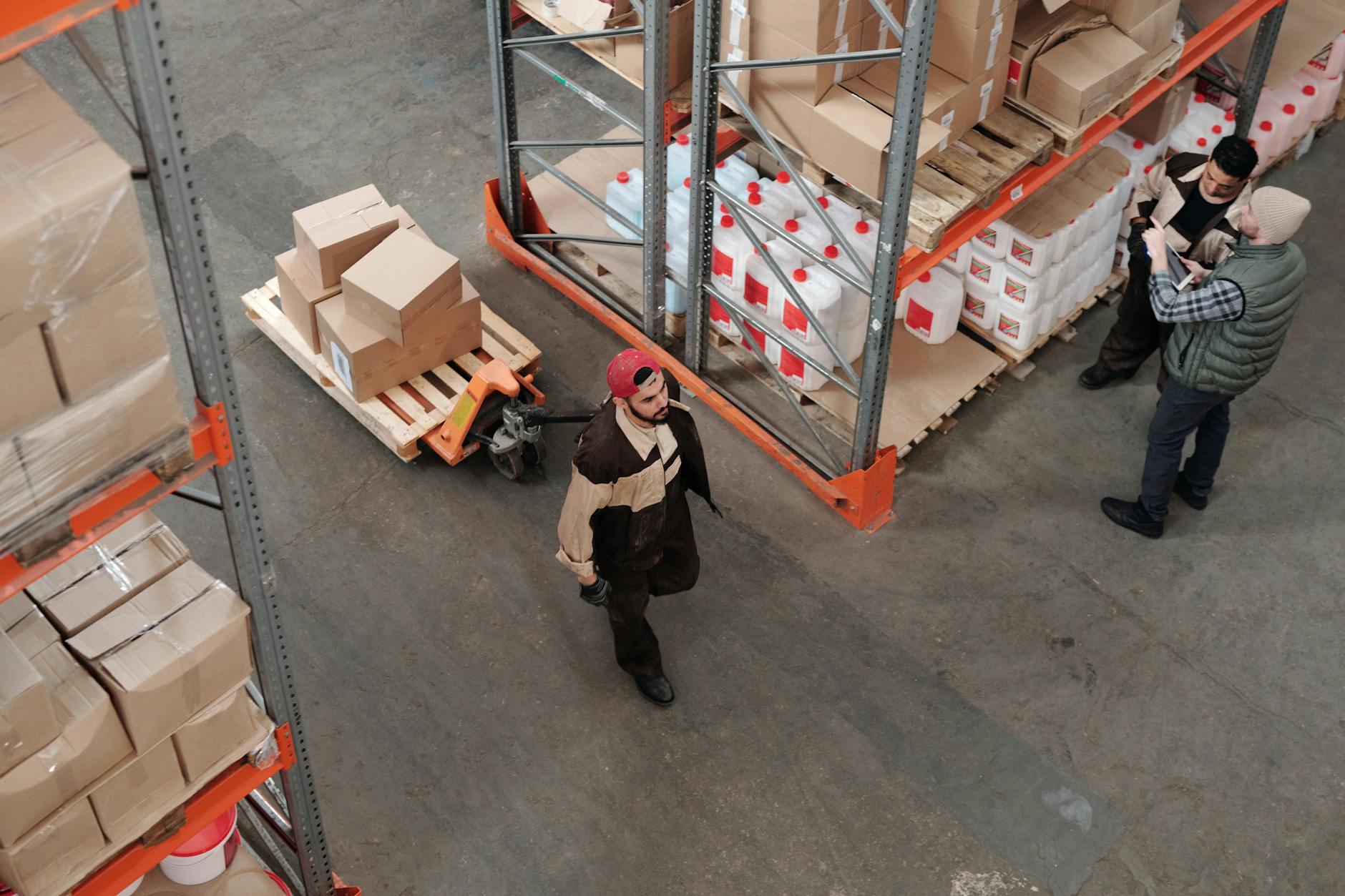
Selling across multiple channels multiplies the complexity of your automated order fulfillment setup, but it also multiplies revenue opportunity. The key is centralizing order flow so that each channel feeds into one system rather than maintaining separate fulfillment workflows per platform.
Start by auditing which channels actually drive profitable volume. It’s common for sellers to discover that one or two marginal channels consume disproportionate fulfillment overhead relative to their revenue contribution. Consider consolidating or dropping channels that don’t justify the integration complexity.
When connecting multiple channels, pay close attention to SKU mapping. The same product often has different identifiers on Shopify, Amazon, and Etsy. A robust automated order fulfillment setup uses a master SKU system that maps every channel-specific identifier back to one true inventory record. Mismatched SKUs are a leading cause of fulfillment errors in multi-channel operations.
Another consideration is order batching logic. If a customer places separate orders on two different channels within a short window, some advanced OMS platforms can detect and merge them into a single shipment, cutting shipping costs and reducing packaging waste. This feature alone can save mid-size sellers thousands of dollars annually.
Common Mistakes to Avoid in Your Automated Order Fulfillment Setup
Even well-planned automation projects run into predictable pitfalls. Knowing these in advance can save weeks of troubleshooting and prevent costly customer-facing errors.
- Automating a broken process. If your manual workflow has fundamental flaws—unclear SKU naming, inconsistent packaging standards, unreliable suppliers—automation will simply execute those flaws faster and at greater scale. Fix process issues before you automate them.
- Skipping the reconciliation step. Teams eager to go live often skip a full inventory count before activating real-time sync. The result is weeks of oversold items and manual firefighting that could have been avoided with a single afternoon of counting stock.
- Over-customizing routing rules too early. It’s tempting to build dozens of granular shipping rules on day one. Start simple with two or three core rules, then add complexity only once you have data showing where it’s needed.
- Ignoring returns and exchanges. Many automated order fulfillment setup projects focus entirely on the outbound journey and treat reverse logistics as an afterthought. Returns should be mapped and automated with the same rigor as shipping.
- Neglecting mobile and SMS notification testing. Email templates get tested; SMS and push notifications often don’t. Broken links or formatting issues in automated texts are a common source of customer complaints after launch.
- Underestimating the content bottleneck. As noted above, if your product imagery pipeline can’t keep pace with your automated listing and fulfillment speed, you end up with a system that can ship products faster than it can actually list them. Solving this with tools like AI-generated product photography closes that gap.
- Forgetting international compliance rules. If you ship cross-border, automated systems need correctly configured customs forms, duties calculations, and restricted item checks built in from day one—retrofitting these later is far more disruptive.
KPIs to Track After Launching Your Automated Order Fulfillment Setup
Once your automated order fulfillment setup is live, tracking the right metrics tells you whether it’s actually delivering value or just moving the same problems around faster. Focus on these core KPIs during your first 90 days:
- Order-to-ship time: the average time between order placement and carrier pickup. A mature setup should bring this under 24 hours for in-stock items.
- Fulfillment accuracy rate: the percentage of orders shipped without errors (wrong item, wrong quantity, wrong address). Target 99.5% or higher.
- Inventory accuracy: how closely your system’s recorded stock matches physical counts. Aim for 98%+ and audit monthly.
- Shipping cost per order: track this against your pre-automation baseline to quantify savings from automated rate shopping.
- Exception rate: the percentage of orders that require manual intervention. A healthy automated system should see this fall below 5% within the first quarter.
- Customer-reported fulfillment issues: complaints or support tickets tied to shipping delays, wrong items, or missing tracking. This is often the clearest signal of real-world performance.
Reviewing these metrics weekly in the first two months, then monthly afterward, keeps your automated order fulfillment setup accountable and highlights emerging issues before they affect a large share of orders.
Automating Product Visuals for Faster Listings
One of the most underrated levers in a modern automated order fulfillment setup is how quickly you can get new products photographed, listed, and ready to ship. Traditional product photography—booking a studio, hiring a photographer, scheduling shoots—can delay a product launch by days or weeks. That delay directly limits how fast your fulfillment pipeline can start processing orders for new SKUs.
By 2026, AI-generated product imagery has become mainstream enough that most fast-moving DTC brands use it as a standard part of their catalog workflow. Tools like AI Product Photography let you upload a simple product shot and generate multiple professional, on-brand variations—lifestyle scenes, white backgrounds, seasonal themes—without a physical shoot. This shortens the time between “product arrives at warehouse” and “product is live and orders start flowing through your automated fulfillment system.”
If you’re working with supplier-provided images that are low resolution or poorly cropped, an AI Background Remover and an AI Image Upscaler can clean those up in seconds rather than requiring a designer. This matters more than it might seem: listings with inconsistent or low-quality images see higher return rates because customer expectations don’t match the product they receive—an issue that directly impacts your reverse logistics and refund workflows.
Brands building out seller profiles, press kits, or About pages as part of their fulfillment and customer trust strategy can also use AI Headshots to produce consistent, professional team photos without scheduling a group photoshoot—useful when onboarding new warehouse managers, customer service leads, or account managers who need profile photos across your OMS, CRM, and marketplace seller accounts.
A Realistic Example: Mid-Size Apparel Brand
Consider a mid-size apparel brand doing roughly 150 orders per day across Shopify, Amazon, and a wholesale B2B portal before automation. Before implementing an automated order fulfillment setup, the brand relied on a single operations employee manually checking inventory spreadsheets and re-entering orders into their shipping software each morning—a process that took nearly four hours daily and routinely caused same-day shipping cutoffs to be missed.
After a six-week automated order fulfillment setup project involving an all-in-one OMS, API-connected carrier accounts, and automated SKU mapping across channels, the brand reduced daily manual processing time to under 30 minutes, cut average order-to-ship time from 36 hours to 14 hours, and reduced shipping costs by 17% through automated rate shopping. Inventory accuracy improved from roughly 91% to 98.6% within the first two months, largely due to the full reconciliation performed before go-live.
The brand also restructured its product imagery workflow during the same project, switching from outsourced photography (which averaged 9 days turnaround per new SKU batch) to an AI-assisted pipeline using AI Product Photography and background removal tools, cutting new listing turnaround to under 24 hours. This meant new seasonal drops could go live and start generating orders almost immediately after automation was configured, rather than waiting on a separate content bottleneck.
Frequently Asked Questions About Automated Order Fulfillment Setup
How much does an automated order fulfillment setup typically cost?
Costs vary widely based on order volume and complexity. Small stores can get started with an all-in-one OMS for $50-$150 per month, while mid-size multi-channel sellers often spend $300-$2,000 monthly on a hybrid OMS plus 3PL arrangement. Custom-built systems for high-volume enterprises can run $10,000 or more in upfront development costs plus ongoing maintenance.
How long does it take to fully automate order fulfillment?
Most small-to-mid-size stores complete a full automated order fulfillment setup in two to six weeks, including a pilot testing phase. Larger operations with custom integrations or multiple warehouses may take two to four months to reach full automation across every channel and process.
Can I automate order fulfillment without a 3PL?
Yes. Many stores automate order entry, inventory sync, carrier selection, and notifications while still picking and packing in-house using an all-in-one OMS or warehouse management software. A 3PL becomes more valuable once order volume or SKU complexity makes in-house fulfillment inefficient, typically beyond 200-300 orders per day.
What’s the biggest risk when automating order fulfillment?
The most common risk is automating a flawed process or going live with inaccurate starting inventory, both of which cause the system to make fast, confident mistakes at scale. Running a full process audit and inventory reconciliation before launch significantly reduces this risk, along with piloting with a small percentage of orders before full rollout.
Do I need technical or developer skills to set up automation?
Not for most small-to-mid-size implementations. Modern OMS and shipping platforms are built for non-techn