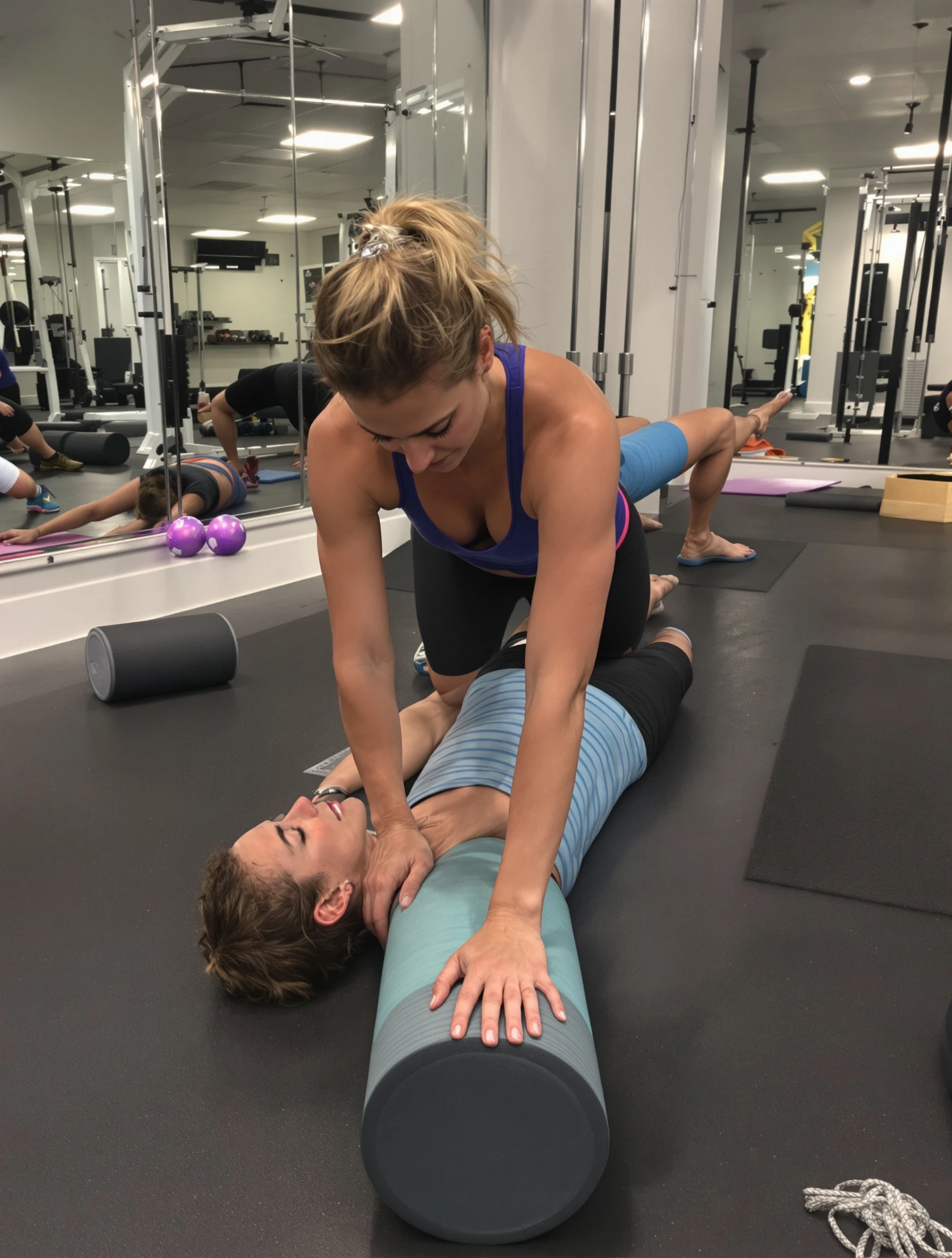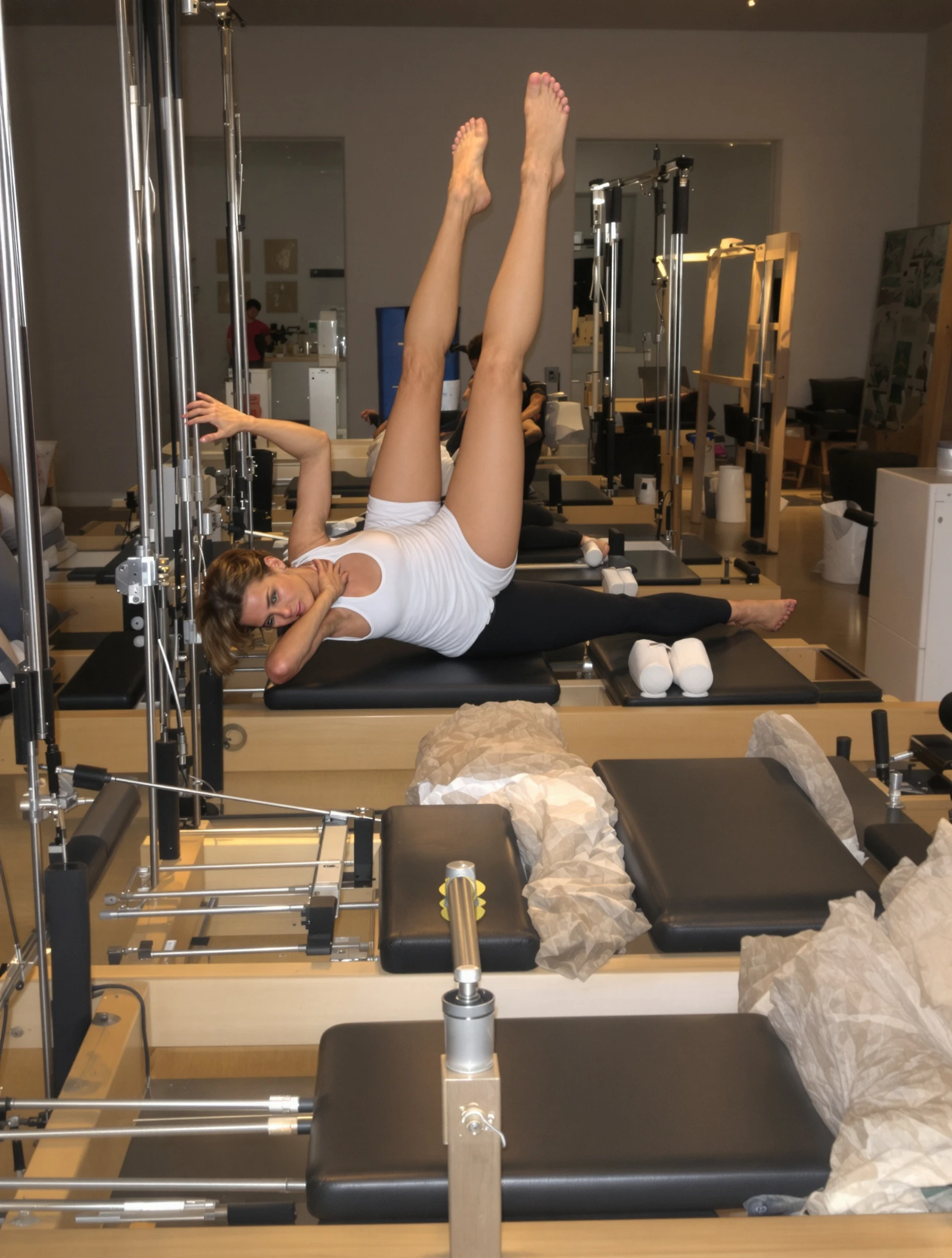
Graceful woman in Pilates reformer class, elongating and strengthening. Studio setting, focused on form, controlled movements, body awareness.
Graceful woman in Pilates reformer class, elongating and strengthening. Studio setting, focused on form, controlled movements, body awareness.
Free to Use (CC BY 4.0)
This AI-generated image is free for personal and commercial use. Just include a link back to PixelPanda.
Perfect For
About This AI-Generated Lifestyle Photo
For Pilates content this matters more than it would for most fitness niches. Clients choose reformer studios because they trust someone to correct their form, so a photo that shows visible spinal alignment and controlled tension does the selling. Springs, footbar, and straps are recognizable to anyone who has taken a class, and an uncluttered room signals a small-group or private studio rather than a crowded gym floor.
To recreate it, keep the camera roughly level with the carriage so the body line is not distorted, and shoot mid-movement rather than at full extension. For a rehab or physio angle, add a bolster or a hands-on cue from an instructor. For a mat or barre focus, drop the reformer and use a prop that reads instantly, like a magic circle or a small ball.
Tips for Lifestyle Photography
- Shoot from the side at carriage height so spinal alignment and hip position stay honest and uncompressed.
- Choose fitted, unpatterned activewear so viewers can actually see ribcage, pelvis, and shoulder placement.
- Capture the middle of a rep, not the endpoint, to show control rather than a held pose.
- Keep the studio floor and walls clear so the reformer springs and footbar are unmistakable.
Frequently Asked Questions
Why does Pilates photography look better without dramatic lighting?
Hard side light and deep shadows hide alignment. Pilates marketing depends on people seeing a neutral spine, stacked shoulders, and level hips. Soft even studio light keeps those details legible while still giving enough shape to the back and legs. Save high-contrast lighting for strength or HIIT imagery where effort, not precision, is the message.
Should the reformer be fully visible in the shot?
Show enough that the equipment reads instantly: the footbar, the carriage, and ideally the springs. Cropping tightly on the body loses the one visual cue that separates reformer content from mat Pilates or general stretching. A three-quarter side angle usually captures the machine and the body line in the same frame.
What pose works best for a studio homepage or class booking page?
A footwork or leg-press position on the carriage is widely recognized and looks approachable to beginners. Avoid advanced work like long spine or teaser on your main page, since it can suggest the class is beyond a newcomer's reach. Save harder repertoire for instructor bios or advanced class listings.
Technical Details
Soft side light from a large studio source wraps the back and legs with minimal shadow. A moderately shallow depth of field keeps the body sharp while the pale wall falls off gently. Level side framing, neutral cool-toned color grade.