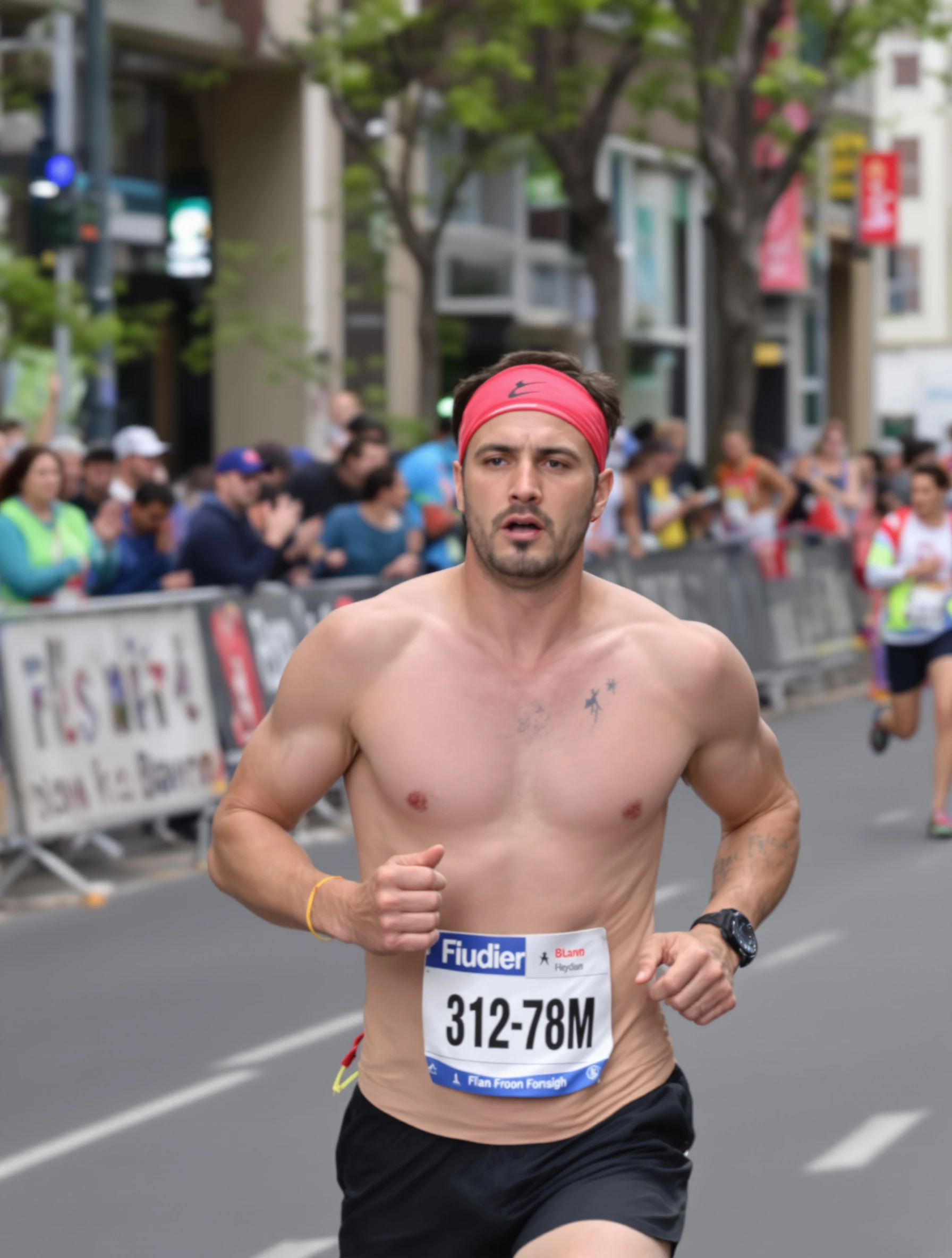
Man running marathon, determined expression, crowds cheering along route. Running singlet with bib, urban race course, endurance athlete.
Man running marathon, determined expression, crowds cheering along route. Running singlet with bib, urban race course, endurance athlete.
Free to Use (CC BY 4.0)
This AI-generated image is free for personal and commercial use. Just include a link back to PixelPanda.
Perfect For
About This AI-Generated Lifestyle Photo
Fitness audiences scroll past posed gym mirrors quickly, but a mid-race stride photo carries evidence. The bib signals commitment, the crowd signals stakes, and the expression signals the part of the marathon people actually relate to, somewhere past mile 18. For a running coach or pace group leader, this reads as credibility. For a personal account, it works as a training log header, a race report cover, or the image that sits above a finish time.
To recreate it, prioritize a genuine stride phase over a smile, and keep the bib fully legible and unwrinkled. Swap the singlet for a long-sleeve base layer and gloves to suggest a cold-weather race, or use a hydration belt and visor for a hot marathon. For triathletes, add tri kit and race tattoos. For beginners, shift to a shorter distance event with a smaller crowd.
Tips for Lifestyle Photography
- Shoot at a shutter speed fast enough to freeze the airborne foot while letting the crowd blur behind.
- Keep the bib flat and unfolded; a crumpled number instantly reads as staged rather than race-day.
- Position the camera low and slightly ahead so the stride looks like it is coming toward the viewer.
- Let sweat and flushed skin show; overly clean kit undercuts the late-race effort in his expression.
Frequently Asked Questions
Should the bib number be readable or blurred in a race photo?
Keep it readable. A legible bib is what separates a race photo from a training run and gives the image its credibility. If you are using a generated image for a brand page, use a neutral number that does not imply a specific event result you cannot back up.
What makes a running photo look like a marathon rather than a short run?
Three cues do most of the work: a pinned bib, spectators behind barricades, and visible fatigue in the face and posture. Minimal kit also helps, since marathoners carry little. Add a course marker, gel wrapper, or hydration station in the background if you want the distance to be unmistakable.
Is a mid-stride action shot better than a finish line photo for a fitness profile?
Mid-stride usually performs better as a profile or header image because the body is dynamic and the face shows effort. Finish line photos are celebratory but often show slumped posture and closed eyes. Save the finish shot for a race recap post and use the stride shot where people first see you.
Technical Details
Directional daylight from the side rakes across the runner's face and shoulders, defining muscle without flattening it. A wide aperture drops the crowd and street into soft bokeh, while the mid-action crop and slightly warm, contrast-forward color grade keep attention on the stride.