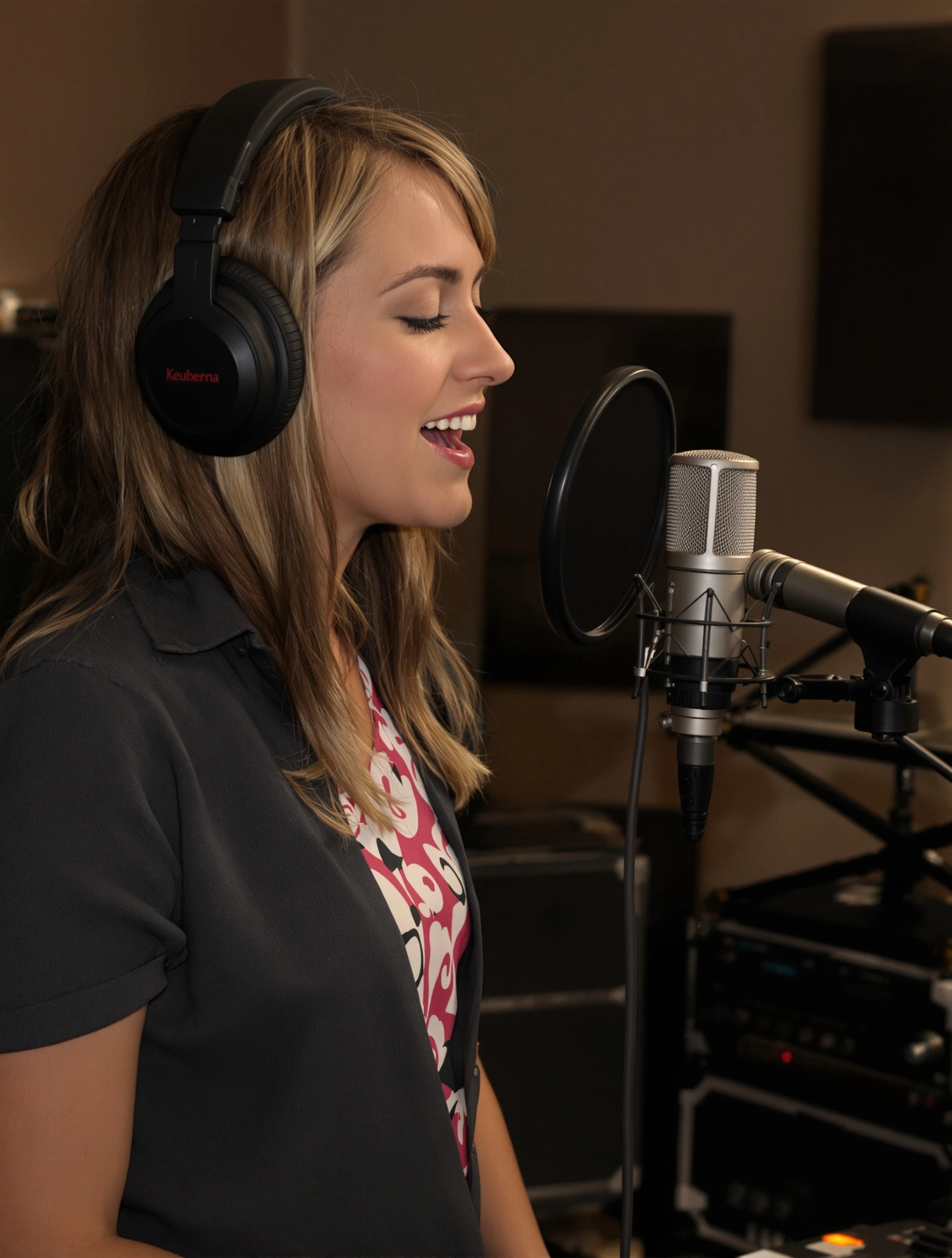
Woman in music studio with microphone, recording vocals with emotion. Headphones on, professional setup, musical creation, artistic expression.
Woman in music studio with microphone, recording vocals with emotion. Headphones on, professional setup, musical creation, artistic expression.
Free to Use (CC BY 4.0)
This AI-generated image is free for personal and commercial use. Just include a link back to PixelPanda.
Perfect For
About This AI-Generated Lifestyle Photo
For artist pages, this beats a smiling headshot because it functions as proof of practice. On Spotify or Apple Music the image gets cropped hard, so having her face and the mic packed into the upper center keeps the crop safe. Bandcamp and SoundCloud banners crop wide, and the dark right-hand fall-off gives room for a name overlay without adding a text box. Press writers also prefer a working shot for feature layouts.
To recreate it, keep the light single-source and low, roughly 45 degrees off the face, and let the room go dark. A rapper might trade the condenser for a handheld dynamic mic and shift to a straighter posture. Producers can swap the mic for a console and keep the headphones. Change the top color to match cover art, and try both eyes-closed and direct-to-camera versions.
Tips for Lifestyle Photography
- Keep the pop filter in frame but slightly off-axis so it does not fully block the mouth or jawline.
- Shoot at eye level or a hair below so the mic reads as tall and the posture stays confident.
- Let one side of the face fall into shadow; even lighting makes studio shots look like stock photos.
- Capture the hand on the headphone cup, a common vocal-tracking habit that instantly signals a real take.
Frequently Asked Questions
Should my artist photo show me singing or looking at the camera?
Use both. A mid-phrase shot like this works for press features, album inserts, and banners because it tells a story. A direct-to-camera version is easier for small circular avatars on streaming platforms, where a closed-eye expression can read as unclear at thumbnail size. Generate a matching pair in the same lighting.
Will the microphone and pop filter hide too much of my face?
Only if it sits dead center. Angle the mic so it crosses the cheek or chin line instead of the mouth and nose. Keeping the near eye and jawline unobstructed preserves recognition. A mesh filter blocks less than a foam windscreen, so choose mesh when the face needs to stay readable.
What should I wear for a studio vocal session photo?
Solid dark or muted tones in a relaxed cut. Studios are dim and busy with cables, stands, and foam, so busy prints compete with the gear. Avoid shiny fabric that catches the key light and pulls attention off the face. A single accent color that matches your cover art ties the whole release together.
Technical Details
Single warm key light from about 45 degrees off camera, low and soft, with deep unlit shadow on the opposite side. Shallow depth of field melts the acoustic panels, tight upper-body framing, and a slightly amber, low-saturation grade.