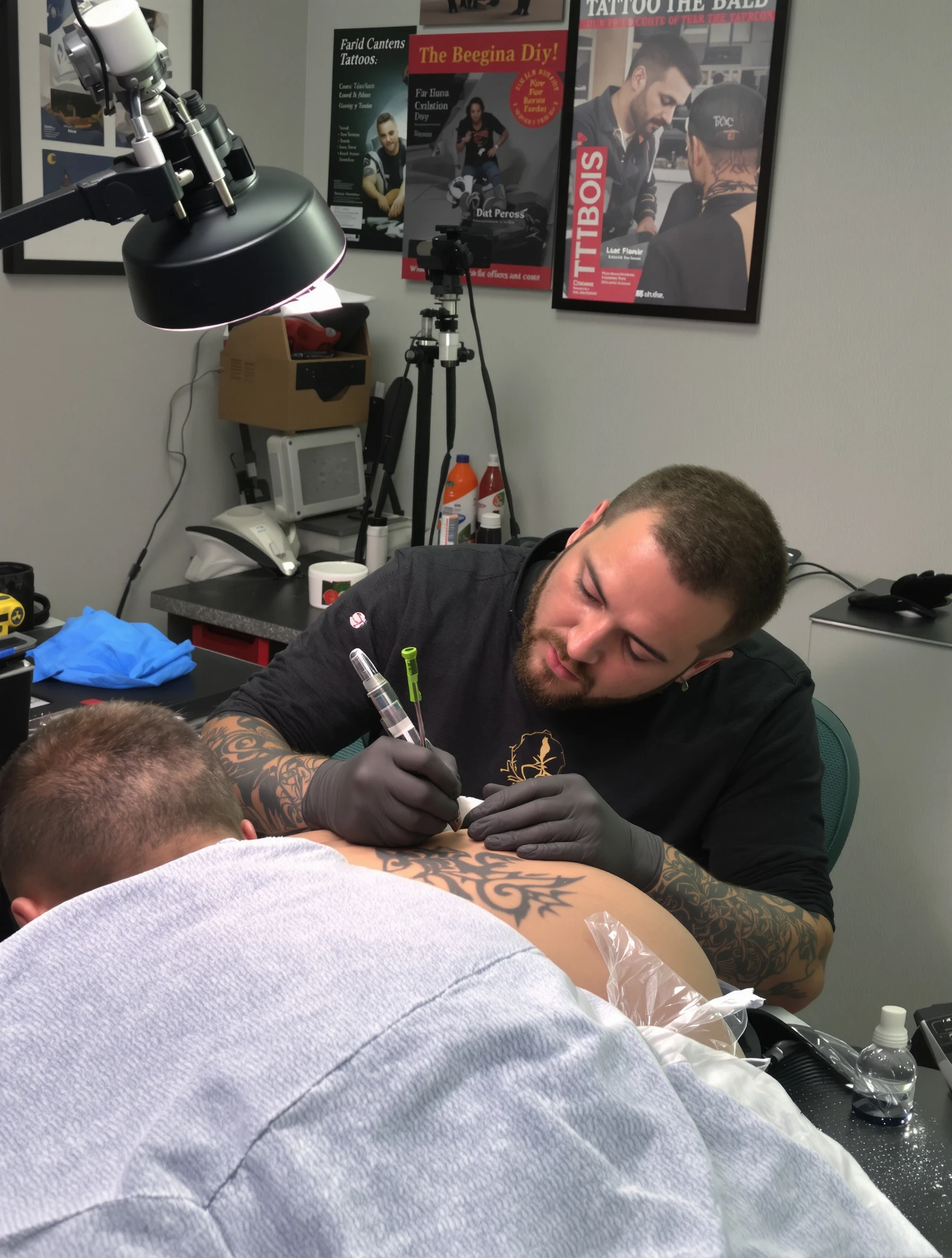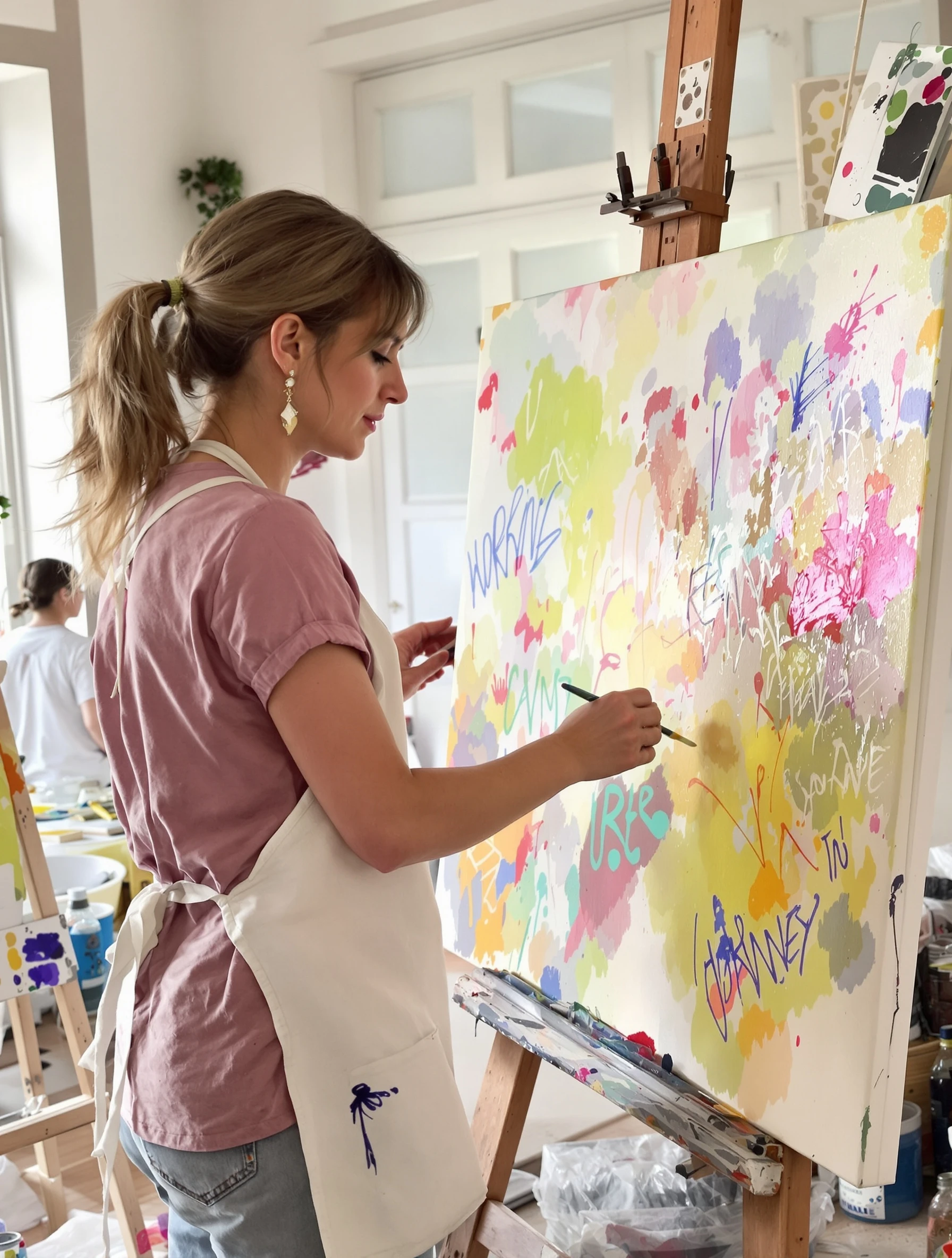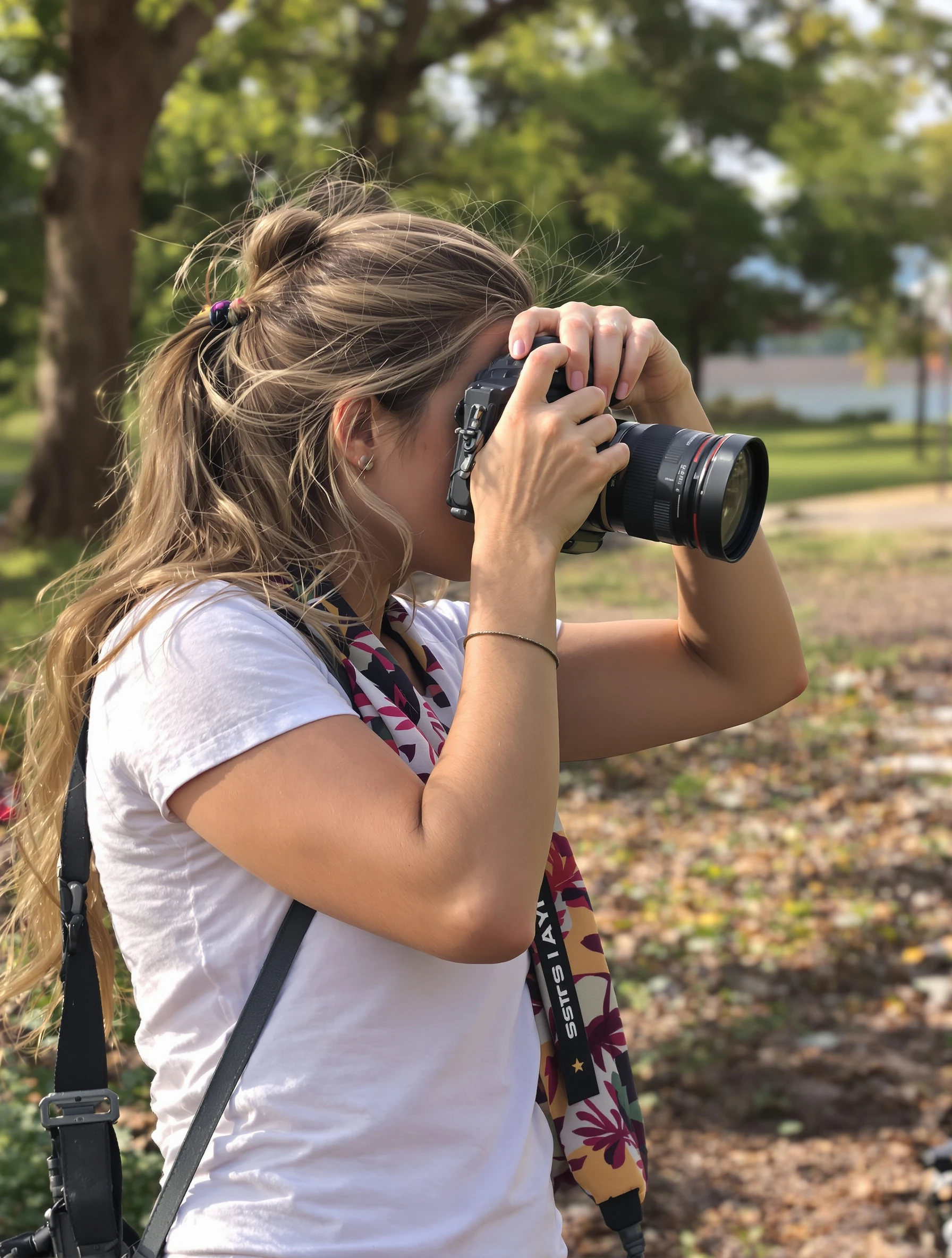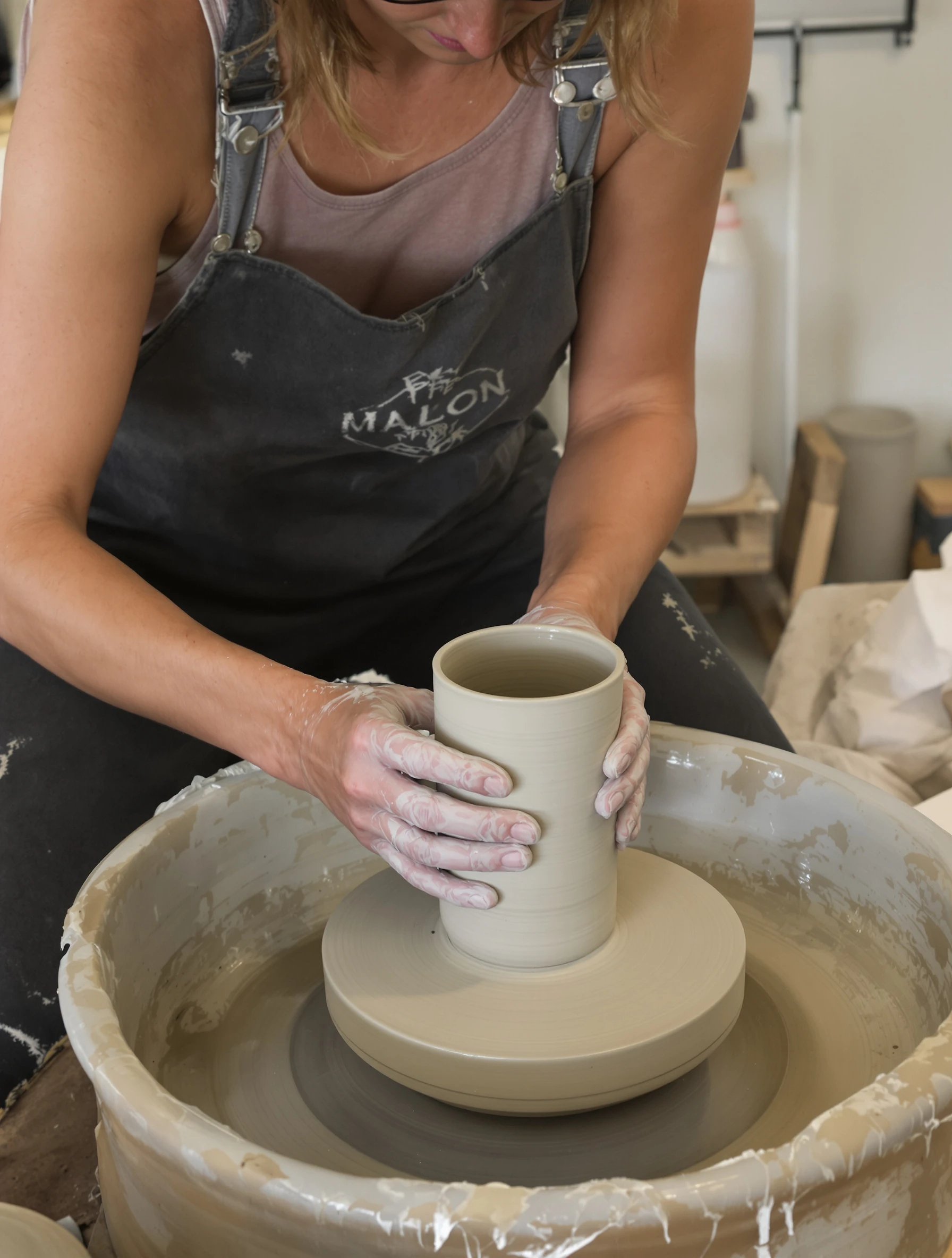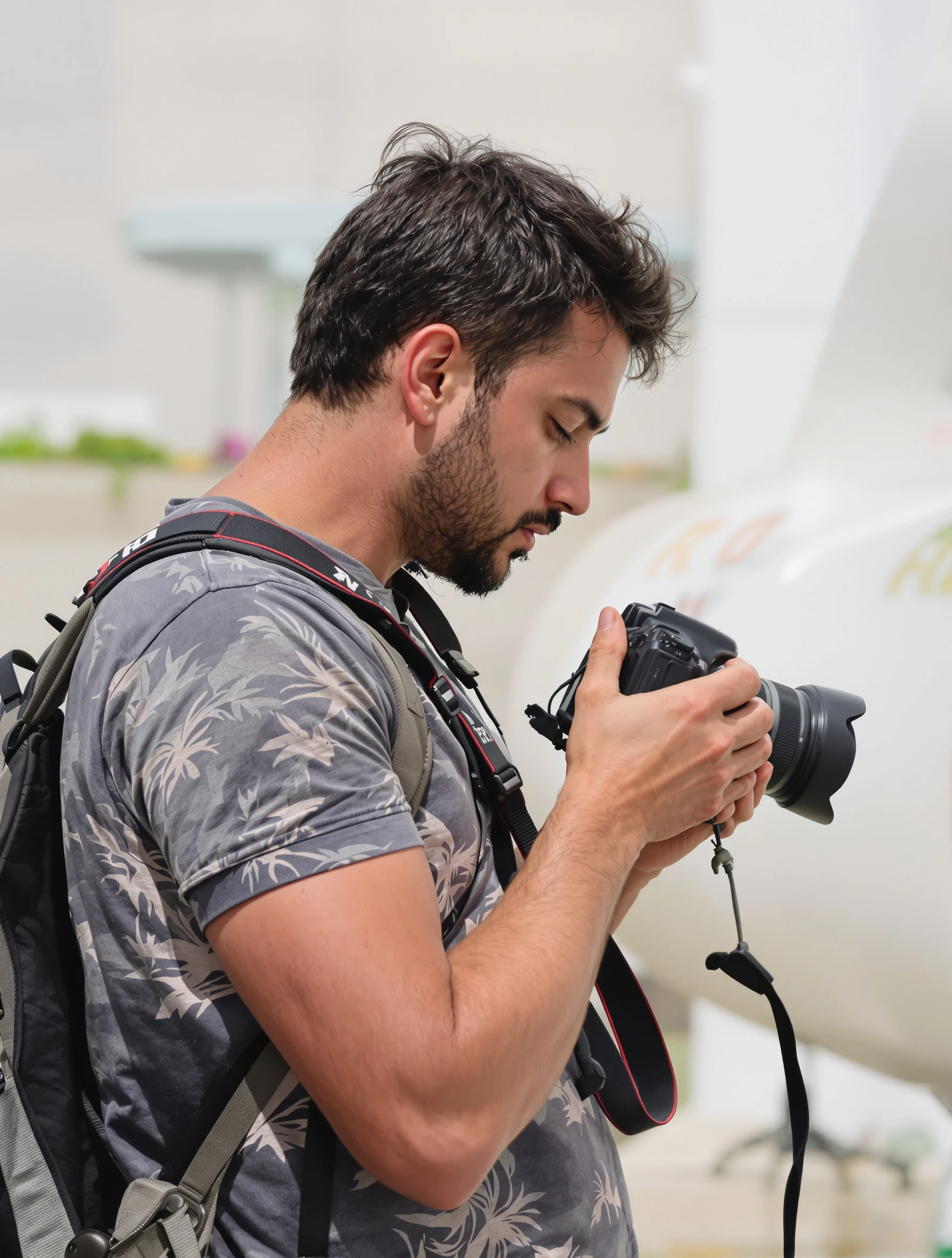
Male photographer on location, professional camera, capturing the world. Photography gear, artistic eye, visual storytelling, creative work.
Male photographer on location, professional camera, capturing the world. Photography gear, artistic eye, visual storytelling, creative work.
Free to Use (CC BY 4.0)
This AI-generated image is free for personal and commercial use. Just include a link back to PixelPanda.
Perfect For
About This AI-Generated Lifestyle Photo
For a creative portfolio, an about page, or a Behance and Instagram profile, this beats a studio headshot because it answers the client's real question: what does this person look like on a job. The visible grip and posture read as competence to anyone who has held a camera. The defocused background keeps the location generic enough to fit any project while still saying on location. It also crops well, the vertical center holding face and camera together for square and 4:5 formats.
To recreate it, shoot during the soft hour before midday harshness or after mid-afternoon, position the light slightly off to one side, and actually photograph something so the posture is real. Swap the body language for the discipline: a videographer can hold a gimbal or rig, a documentary shooter can lower the camera and look off-frame, a studio photographer can trade the jacket for rolled sleeves and indoor light.
Tips for Lifestyle Photography
- Keep both hands on the camera, left hand under the lens barrel, elbows tucked, so the grip reads as habit not staging.
- Choose muted jacket tones over logos and bright color so the camera body stays the visual anchor of the frame.
- Actually aim at something real; a raised camera with unfocused eyes behind it looks staged immediately.
- Let the strap hang naturally across one shoulder rather than dangling loose or removed entirely.
Frequently Asked Questions
Should the camera hide my face in a photographer portrait?
Partly is fine, fully is not. Keep at least one eye, the brow, and the jaw visible so people can still recognize you. A useful compromise is shooting a frame with the camera at eye level and a second with it lowered to chest height, then using the raised version for headers and the lowered one for profile avatars.
Does the type of gear in the shot matter to clients?
Less than how you hold it. Most clients cannot identify a body or lens, but they do read posture, grip, and focus. What matters is that the gear looks used rather than unboxed and that the handling looks correct. Avoid stacking accessories you would never bring to an actual shoot, since working photographers spot that quickly.
What background works best for an on-location photographer portrait?
Something with depth but no readable detail. A street, treeline, or open landscape rendered soft gives the sense of being out working without tying you to one city or genre. Skip busy signage, recognizable landmarks, and other people in focus, all of which date the image and pull attention away from your face and camera.
Technical Details
Directional daylight from one side gives soft modeling across the face with an open shadow on the other. Shallow depth of field renders the location as blurred shapes, keeping camera and expression sharp. Natural, slightly desaturated color and a chest-up crop.